You're searching for this because you — or someone you care about — need a practical solution to an everyday challenge, and you don't want to spend a fortune figuring out what works. The good news: some of the most genuinely life-improving assistive technology costs less than a dinner out. A few items on this list cost less than a cup of coffee.
This guide highlights real products, organized by the everyday problems they solve, so you can find something useful right now — no insurance approval, no months-long waitlist, no sticker shock.
Why "Under $100" Matters
Expensive, high-tech AT gets a lot of attention. But for many people, the biggest barriers aren't complex — they're the small daily frustrations that pile up. Can't read the price tag at the store. Can't button a shirt without help. Can't hear the phone ring from the next room. Can't write a birthday card to a grandchild.
Low-cost assistive technology won't solve everything, but it can restore independence in moments that matter. These products are also low-risk: if something doesn't work for you, you haven't invested hundreds of dollars. That makes them perfect for trying things out, discovering what helps, and building confidence before committing to bigger solutions.
For Reading, Seeing, and Telling Time
Vision-related challenges affect more aspects of daily life than most people realize. These tools tackle some of the most common pain points.
3.5X 45mm Pocket Magnifier — $3.95
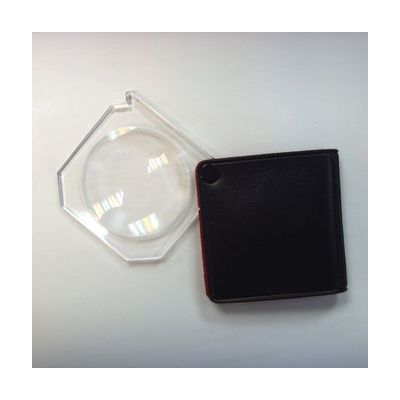 3.5X 45mm Pocket MagnifierIndependent Living Aids$3.95This is a small handheld magnifier with a 3.5x acrylic lens that folds into a protective case when not in use. It's designed for someone with low vision who needs quick, portable magnification for everyday tasks like reading price tags, medicine labels, menus, or small print on the go. The 45mm lens diameter gives a reasonably sized viewing area for a pocket-sized tool, and the flip-out case protects the lens between uses — this is a complete, ready-to-use solution with no batteries or setup required. At 3.5x magnification, this is best suited for mild to moderate low vision; people who need stronger magnification for extended reading will want to look at higher-powered or illuminated options.Magnification toolsNot applicableThe 3.5X Pocket Magnifier is the assistive tech equivalent of keeping a good pen in your pocket — a small handheld magnifier with a 3.5x lens that folds into its own protective case. Toss it in a purse or jacket and pull it out to read menus, medication labels, price tags, or mail. At under four dollars, there's almost no reason not to have one.
Best for: Anyone with low vision who needs quick, portable magnification for everyday reading tasks.
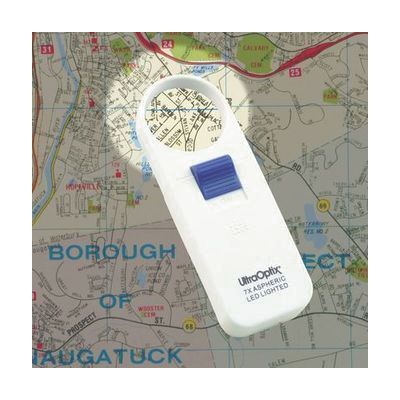 7X 1 1/2" LED MagnifierLS&S$11.95This is a small handheld magnifier that provides 7x optical magnification with a built-in LED light to illuminate text and small objects. It's designed for someone with low vision who needs to read price tags, medicine labels, restaurant menus, or other small print while out and about — the pocket-friendly size makes it practical to carry daily. You get a complete, ready-to-use tool: no batteries to install separately are mentioned, no app, no pairing — just turn it on and look. At 7x magnification, the 38mm lens gives a relatively narrow field of view, so reading long passages of text is slow going; this is better suited for spot-reading short items than extended reading sessions.Magnification toolsDedicated deviceIf you need stronger magnification at a desk or workstation, a 7X 1½" LED Magnifier ($12–$15 range) adds illumination and higher power for tasks like reading fine print on medication bottles or bank statements.
Optiloupe Attach — $15.45
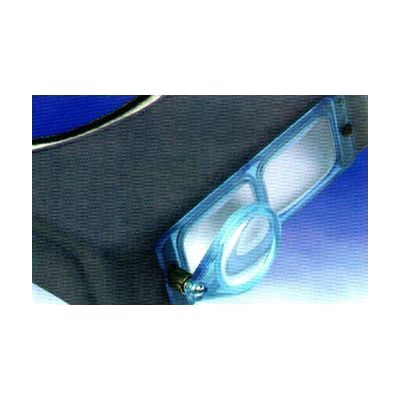 Optiloupe AttachDonegan Optical$15.45The Optiloupe Attach is a supplementary lens that threads onto an OptiVISOR headband magnifier to boost its magnification by 2.5 times, allowing closer, more detailed viewing of small objects. It's useful for someone with low vision who needs stronger magnification for tasks like reading fine print, doing needlework, or inspecting small components. This is an add-on accessory only — it requires an OptiVISOR headband magnifier (sold separately) to function, and it provides monocular (single-eye) viewing rather than binocular. The stronger magnification reduces the working distance and field of view, so it works best for stationary close-up tasks rather than general use.Magnification toolsNot applicableIf you already use (or are considering) an OptiVISOR headband magnifier for hobbies or detailed work, the Optiloupe Attach is a supplementary lens that threads on to boost magnification by 2.5x. It turns a good magnifier into a great one for tasks like soldering, model building, needlework, or reading fine print — all hands-free. Note: this is an add-on, not a standalone magnifier. You'll need a compatible OptiVISOR headband to use it.
Best for: People with low vision who do close-up detail work and already own an OptiVISOR. May benefit from guidance on setup.
Low Vision Watch with Night Light — $29.95
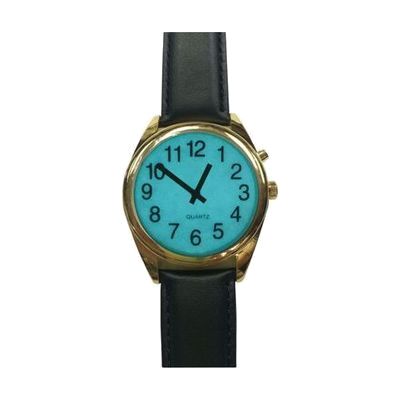 Low Vision Watch with Night LightLS&S$29.95This is an analog wrist watch designed for people with low vision, featuring a large, high-contrast dial with bold hour markers and hands that are easier to read at a glance. The built-in electroluminescent backlight lets you check the time in dim or dark environments without needing a separate light source. It comes as a complete, ready-to-wear solution — no setup, apps, or pairing required. The dial is about 1.4 inches across, which is meaningfully larger than a standard watch face but smaller than a talking watch or digital clock, so it works best for those with moderate low vision rather than severe vision loss.Low vision aidsDedicated deviceThe Low Vision Watch with Night Light is a surprisingly meaningful upgrade — an analog wristwatch with a large, high-contrast dial, bold markers, and a built-in backlight. For someone who's been squinting at their watch or giving up and asking someone else for the time, this restores a small but real piece of independence.
Best for: People with low vision who prefer a traditional analog watch face and want to check the time easily, day or night.
Digital Talking Atomic Watch — $38.95
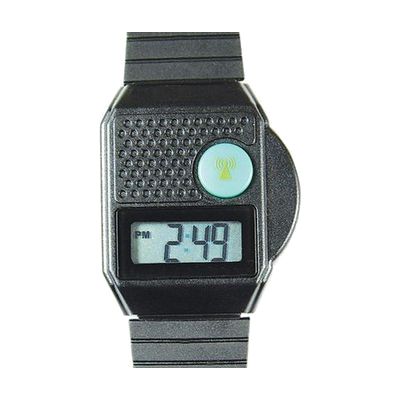 Digital Talking Atomic Watch - BlackLS&S$38.95This is a wristwatch that announces the current time, date, and alarm audibly when you press a button on the top of the case — no need to read a display. It's designed for people with low vision or blindness who find it difficult or impossible to read a standard watch face, including those who prefer a wrist-worn option over a talking clock. The watch comes ready to wear with a black plastic band and sets itself automatically via radio signal, so there's no fiddling with time zone settings beyond a one-time configuration. The main limitation is that the announced time is helpful primarily in private settings — the spoken output may not be practical in quiet public spaces where audio is disruptive.Low vision aidsDedicated devicePress a button on the Digital Talking Atomic Watch and hear the time spoken aloud — along with the date and alarm. No need to read any display at all. The atomic sync feature means it sets itself accurately, so there's less fiddling with tiny buttons. This is a meaningful tool for people who are blind or have significant low vision.
Best for: People who are blind or have low vision and want reliable, spoken time and date information on their wrist. Someone may need to help with initial button setup.
For Getting Dressed and Managing Daily Tasks
When fine motor skills are limited — whether from arthritis, stroke, injury, or a lifelong condition — simple daily routines can become exhausting. These tools quietly remove friction.
Dual-Ended Button Aid — $10.99
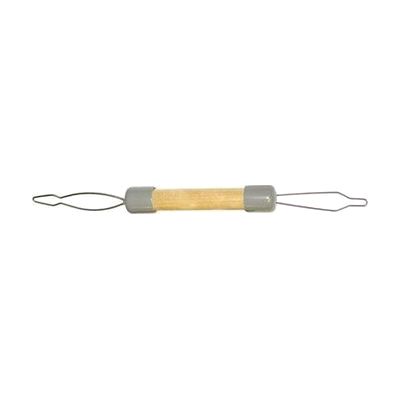 Dual-Ended Button AidMaxiAids$10.99This dressing aid uses two wire loops — one standard-sized and one larger — to thread buttons through buttonholes without requiring fine finger pinch or grip strength. It's designed for anyone who finds buttoning shirts, blouses, coats, or jackets difficult due to reduced hand dexterity, arthritis, stroke, or limited finger coordination. About 9.5 inches long with a handle, it's a complete, ready-to-use tool right out of the package. The wire loop style is simple and widely used, but it does take a little practice to get the technique down, and it won't help with very small or unusually shaped buttons.Daily living aidsNot applicableThe Dual-Ended Button Aid is one of those products people describe as "I didn't know this existed, and now I can't believe I went so long without it." It uses two wire loops (one standard, one larger) to push buttons through buttonholes without requiring the fine finger pinch that buttoning normally demands. Getting dressed independently again — for eleven dollars.
Best for: Anyone who struggles with buttons due to arthritis, limited hand strength, tremors, or use of one hand.
 Extra Long Shoe Horn$29.39An extended-length shoe horn that allows a person to guide their foot into a shoe while standing upright or seated, without needing to bend down or reach their feet. This is particularly useful for people with hip replacements, back pain, arthritis, or limited flexibility who find bending to put on shoes difficult or painful. It's a complete, ready-to-use tool — no setup, no batteries, no additional equipment needed. The main limitation to know: the length that makes it helpful for people with limited reach can also make it awkward to store; check the specific length against your storage space before ordering.Daily living aidsNot applicableWhile you're thinking about dressing independence, an Extra Long Shoe Horn is another inexpensive tool that helps people avoid bending down — useful for anyone with back pain, hip replacements, or limited flexibility.
Threaded Needles Kit with Folding Scissors — $3.95
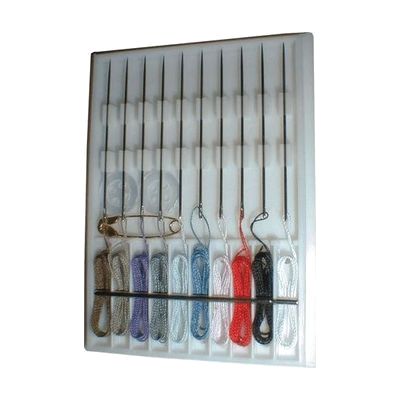 Threaded Needles (10pcs) W/Folding ScissorsIndependent Living Aids$3.95This kit provides ten sewing needles that come already threaded with colored thread, paired with a small folding scissor, so there's no need to thread a needle from scratch. It's designed for people who find threading a needle difficult — whether due to low vision, reduced hand dexterity, or fine motor challenges that make guiding thread through a small eye frustrating or impossible. Everything you need for basic hand-sewing tasks is ready to use right out of the package. Each needle has a fixed length of thread, so this works best for small repairs or short tasks rather than extended sewing projects.Daily living aidsNot applicableThreading a needle requires sharp vision and steady hands — two things many people don't have. The Threaded Needles Kit sidesteps the problem entirely: ten needles come pre-threaded with colored thread, plus a compact folding scissor. Sew on a button, make a quick repair, or hem something without frustration.
Best for: People with low vision, limited dexterity, or both, who want to handle basic sewing tasks independently.
Greeting Card Writing Guide — $7.50
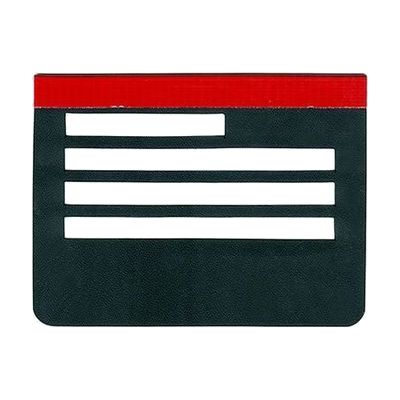 Greeting Card Writing GuideMaxiAids$7.50This is a simple folding template that holds a greeting card in place and shows you exactly where to write — it has cutout windows that line up with the message area of standard greeting cards. It's designed for people with low vision who have difficulty seeing the lines or blank space inside a card, helping them write neatly without drifting off the page or into the wrong area. You get a single ready-to-use guide that works immediately with no batteries or setup. Cutout positions are designed for standard card sizes, so it may not align correctly with unusually sized or formatted cards.Low vision aidsNot applicableThe Greeting Card Writing Guide might surprise you, but think about what it actually enables: writing a personal message in a greeting card, lined up properly, without being able to see the lines or control a pen precisely. It's a folding template with cutout windows that hold a standard card in place and show exactly where to write. For someone who had stopped sending cards because they couldn't write neatly anymore, this is a small thing that means a lot.
Best for: People with low vision or motor difficulties who want to write personal messages in standard greeting cards.
For Hearing Alerts and Managing Sound
Missing a phone call or a weather alert isn't just inconvenient — it can be dangerous. These products convert audio signals into visual or tactile ones, or help manage the sound environment.
Krown LookOut Wireless Telephone / VP Transmitter — $34.67
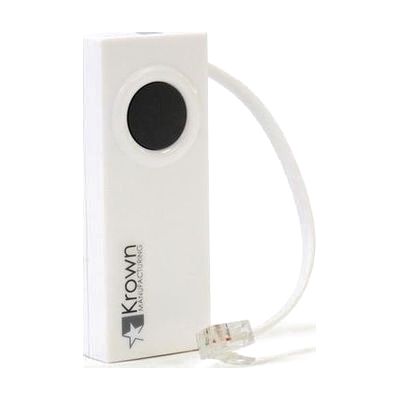 Krown LookOut Wireless Telephone / VP TransmitterKrown$34.67This is a wireless transmitter that detects incoming calls on a landline phone or videophone and sends a signal to a compatible Krown LookOut receiver, which then alerts the user through flashing lights or vibration. It's designed for people who are deaf or hard of hearing and can't rely on a ringing phone to know when a call is coming in. This is not a standalone product — it must be paired with a separate Krown LookOut receiver (such as the All-in-One Notification System or Sidekick Receiver) to actually produce any alert, and those are sold separately. The wireless range of up to 1,000 feet gives flexibility for larger homes, but budget for the complete system cost before purchasing.Alerting systemsDedicated deviceThe Krown LookOut Transmitter detects incoming calls on a landline or videophone and sends a wireless signal to a compatible receiver, which alerts you with flashing lights or vibration. If you're Deaf or hard of hearing and rely on a landline or VP, this means you'll actually know when someone is calling — even from another room.
Best for: Deaf or hard of hearing individuals who use a landline phone or videophone and need visual or tactile call alerts. Important: This is a transmitter only — you'll also need a compatible Krown LookOut receiver (sold separately), which adds to the total cost. Some setup help is recommended.
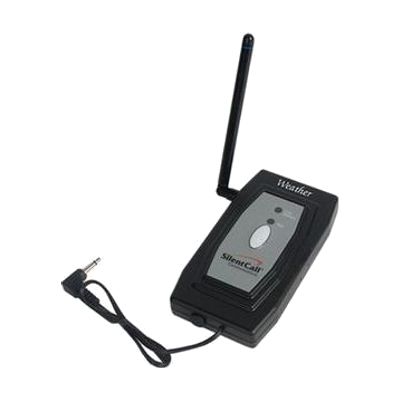 Signature Series Weather Alert 418 MHz Transmitter (WT-SS)Silent Call Communications$99.70This transmitter acts as a bridge between a standard weather alert radio and the Silent Call Signature Series wireless alerting system, converting the radio's audio alert signal into a wireless trigger that activates compatible Signature Series receivers — which can flash lights, vibrate a bed shaker, or trigger other visual/tactile alerts. It's designed for people who are deaf or hard of hearing and rely on visual or tactile notifications rather than sound to become aware of emergency weather broadcasts. This is not a standalone product — it requires both a compatible weather alert radio (not included) and at least one Silent Call Signature Series 418 MHz receiver (also not included) to actually deliver an alert. This is a one-way transmitter only; it signals that an alert is happening but doesn't display or relay the specific weather message, so users still need another way to get the actual warning details.Alerting systemsDedicated deviceFor weather emergency alerts specifically, the Signature Series Weather Alert Transmitter from Silent Call Communications works with the same type of alerting system to notify you of severe weather warnings through flashing lights or vibration.
Yogasleep Dohm Classic Sound Machine — $54.99
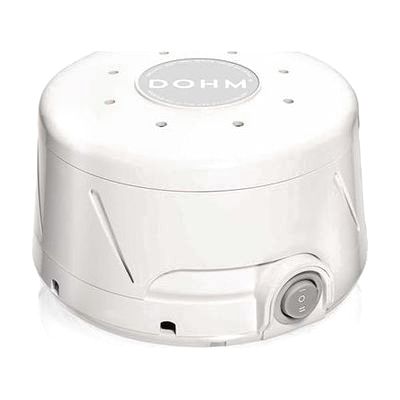 Yogasleep Dohm Classic Sound MachineYogasleep$54.99The Dohm Classic uses a small internal fan to generate a consistent rushing-air sound — natural white noise rather than a digital loop — that masks background noise and helps create a stable sleep environment. It's particularly useful for people with tinnitus (ringing in the ears), light sleepers sensitive to environmental noise, or anyone whose sleep is disrupted by household or neighborhood sounds. You get a self-contained, plug-in device with two speed settings and a twist-to-adjust tone control — no app, no Bluetooth, no setup beyond plugging it in. One honest tradeoff: it runs on AC power only, so it won't work during a power outage or for travel without an adapter, and the tone range is limited compared to digital sound machines that offer multiple sound profiles.Sensory toolsDedicated deviceThe Yogasleep Dohm Classic uses a real internal fan to create natural white noise — not a looping digital recording. It masks background sounds that can be distracting, overwhelming, or disruptive to sleep. This is used by people with sensory processing differences, tinnitus, hyperacusis, or anyone whose hearing challenges make environmental noise harder to manage.
Best for: People who need a stable sound environment for sleep or focus — especially those with sensory sensitivities, tinnitus, or auditory processing challenges.
Pencil Microphone for the ChatterVox — $84.95
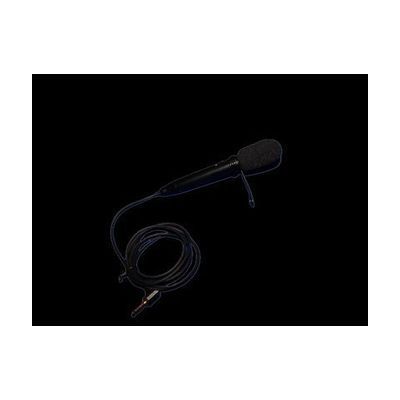 Pencil Microphone For The ChatterVoxIndependent Living Aids$84.95This is a small handheld condenser microphone designed to plug into personal voice amplifiers like the ChatterVox or Pocketalker, giving the user a directional mic they can hold, pass to a conversation partner, or wear around their neck. It's intended for people who need voice amplification but find headset or lapel microphones difficult to manage — whether due to limited hand function, discomfort, or simply preferring a traditional mic form factor. You're getting the microphone only — it requires a compatible voice amplifier (sold separately) to function, and it won't work as a standalone device. The on/off switch is a practical privacy feature, but at 4.25 inches long, it's a bit longer than typical lapel mics, which may make it less discreet in quiet environments.Assistive listening systemsDedicated deviceIf you or someone in your life already uses a ChatterVox personal voice amplifier, the Pencil Microphone is a practical add-on. This directional handheld mic can be held by or pointed toward a conversation partner, making it easier to pick up speech in noisy environments. It's also useful for people with soft speech who want to amplify their voice in specific situations.
Best for: People who already own a ChatterVox amplifier and need better directional pickup for conversations. Important: This is an accessory, not a standalone device — it requires a compatible ChatterVox unit. Some guidance on pairing and use is helpful.
For Play, Recreation, and Sensory Support
Leisure and play aren't luxuries — they're part of a full life. These products make sure that vision loss, motor differences, or sensory needs don't mean sitting out.
Braille Playing Cards — $7.95
 Braille Playing CardsLS&S$7.95These are standard-size plastic playing cards printed with both regular ink numbers/suits and braille markings, so the card value is readable by touch as well as sight. They're designed for someone who is blind or has low vision and wants to join in card games alongside sighted players without needing a separate adapted version of the game. This is a complete, ready-to-use product — open the pack and deal. The main tradeoff is that the braille is on the card face, so players who rely on braille still need to be mindful that their cards could be readable by sighted players across the table.Low vision aidsNot applicableBraille Playing Cards are standard-sized plastic playing cards printed with both regular ink and braille markings. That's it. Simple idea, big impact: a person who is blind or has low vision can play cards with family and friends without needing someone to read their hand to them. Independence at the card table for under eight dollars.
Best for: Anyone who reads braille and wants to participate in card games independently.
Tactile Die (1.25 inches) — $2.95
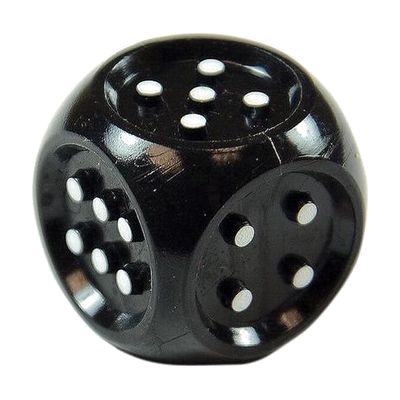 Tactile Die ONLY ONE (1.25 inches)Independent Living Aids$2.95This is a single oversized game die with raised, tactile dots on each face instead of printed or recessed pips. At 1.25 inches square, it's larger than a standard die and easier to handle, and the raised dots let someone identify the number by touch alone without needing to see the face. It's a good fit for someone with low vision or blindness who wants to play dice-based games independently. This is a single die sold on its own — if your game requires multiple dice, you'll need to order accordingly, and color (white or black) must be specified at purchase.Daily living aidsNot applicableThe Tactile Die is a single oversized game die with raised, tactile dots you can feel — not printed or recessed pips. It's larger than a standard die, so it's easier to pick up and roll if you have limited grip, and the raised dots mean you can read the result by touch. Board game night is back on.
Best for: People with low vision or limited fine motor skills who want to play dice-based games independently.
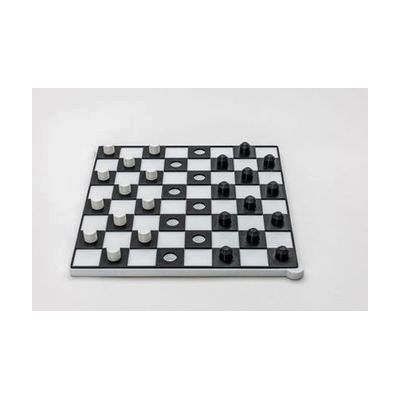 Tactile CheckersIndependent Living Aids$21.76A tactile checkers set redesigned so that the board and pieces can be distinguished by touch alone — raised squares, recessed squares, and center holes that lock pieces in place prevent accidental displacement during play. This is for someone with low or no vision who wants to play checkers independently or with sighted partners without relying on sight to track the board state. The set comes complete: board and pieces are included and ready to use right out of the box. The board is plastic and relatively compact at 14 inches wide, which works fine for casual play but may feel small to players accustomed to standard-sized sets.Daily living aidsNot applicableIf board games are a regular activity, pair these with Tactile Checkers — a checkers set with raised pieces and a tactile board that players who are blind or have low vision can use independently.
How to Choose the Right Product
With so many options — even at low price points — here's how to narrow down what might work best:
- Start with the specific frustration. Don't browse by diagnosis. Think about the exact moment in your day that's hard: "I can't button my shirt," "I miss phone calls," "I can't read the menu." Then look for the tool that solves that one thing.
- Check the complexity level. Some products are completely self-serve — take them out of the package and go. Others benefit from guided setup, meaning you might want a family member, caregiver, or professional to help with initial configuration. The products above note this where relevant.
- Consider combining solutions. A pocket magnifier plus a greeting card writing guide plus a button aid is still under $25 and solves three separate daily challenges. Low cost means you can build a small toolkit.
- Think about the person's other abilities. A talking watch is wonderful — unless the person also has a hearing loss, in which case the high-contrast analog watch might be better. Match the solution to the whole person, not just one need.
- Don't underestimate the emotional impact. A $3 die or an $8 deck of cards might seem trivial, but being able to play a game with your grandchild without help? That's not trivial at all.
- When in doubt, consult a professional. An occupational therapist, assistive technology specialist, or vision rehabilitation therapist can help you identify the right tools and ensure they're set up correctly. This is especially true if you're dealing with multiple needs or aren't sure where to start.
Browse More Affordable Assistive Technology
This guide only scratches the surface. There are hundreds of practical, affordable tools for daily living, communication, mobility, and more. The products highlighted here represent a range — from under $3 to just under $100 — and they all share one thing in common: they solve a real, everyday problem for a real person.
If something on this list looks like it might help, follow the product links above to learn more. And if you're not sure where to start, explore WhatCanHelp.com to search by need, price, or activity — it's free and built to help you discover what's out there.