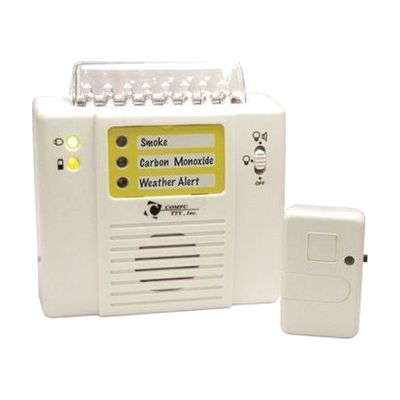
KA300SD Visual Emergency Alert Package
by Krown
Price is what the vendor listed when last checked. Confirm it with the vendor before buying.
What it is
Summary
AI-generated from vendor-published content · October 1, 2026
This kit watches your existing smoke or carbon monoxide alarm and turns its sound into a bright strobe and a loud alert. A small transmitter sits next to the alarm. When the alarm goes off, the transmitter sends a signal to a plug-in receiver, which flashes a 177 mCd strobe and sounds a 95 dB alarm. It's meant for someone who might not hear a standard alarm, such as a person who is deaf or hard of hearing. The receiver has three colored LED channel lights (yellow, green, red) and works up to about 100 feet from the transmitter. The kit includes one transmitter and watches one alarm. One receiver can monitor up to three transmitters, so you'd buy extra transmitters to cover more alarms. The receiver battery backup runs the audible alarm only, not the strobe, so the strobe needs wall power.
Getting it
Try before you buy
Devices like this are often available to borrow through your state's AT Act program — typically free or low-cost — so you can try it before buying or pursuing funding.
Where to get it
This is the vendor WhatCanHelp tracks for this product — it may also be available from other retailers or a local supplier, and prices vary.
How to fund this
These are common places to ask about paying for equipment like this. Each one decides its own eligibility and what it covers, so start by asking them.
Details
Quick Facts Catalog facts · auto-generated
- Type
- Addresses
- Platform
- Age range
- Complexity
- Setup with instructions
- Price
- $233.58
- Funding
- AT Act lending
- Insurance
- Medicaid waiver
- Out of pocket
- Vocational rehab
What setup looks like
- Out of the box
Plug the receiver into a wall outlet and confirm the 9V backup battery is installed. - With a guide
- Attach the transmitter to the smoke or carbon monoxide alarm with the included hook and loop fastener, placed right next to it.
- Test by sounding the alarm and confirm the strobe and loud alert go off on the receiver. Check that the receiver is within the range of about 100 feet, and that walls or distance aren't blocking the signal.
- Plan on 20 to 30 minutes, longer if you add more transmitters.
Compare & explore
Sources & fine print
Vendor facts (name, price, platforms, vendor link) sourced from Diglo — view on vendor site (opens in a new tab); last checked October 31, 2026.
Classification & description AI-generated from vendor-published content on October 1, 2026 · confidence: high. Vendor specs may lag; verify before relying on details in a clinical or funding artifact.