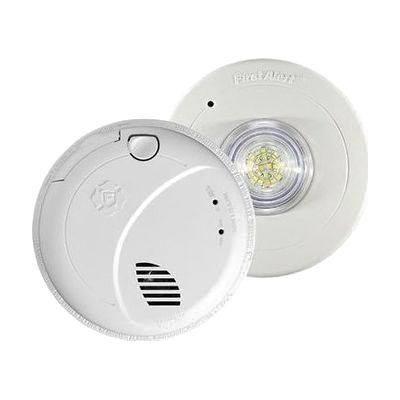
BRK First Alert SMCO100-AC Smoke/CO Alarm with Voice Alert
by First Alert
Last verified June 16, 2026 · classified April 26, 2026
What it is
Summary
AI-generated from vendor-published content · April 26, 2026
This hardwired combination smoke and carbon monoxide detector includes a built-in strobe light that flashes visually when the alarm triggers, making it useful for people who may not hear a standard audible alarm. It's designed for deaf or hard-of-hearing individuals who need visual fire and CO alerts integrated directly into a home safety system, rather than relying on sound alone. The package includes both the detector and the SLED177 strobe unit, and it hardwires into your home's electrical system with a quick-connect plug — so while installation is more involved than a battery-only detector, no rewiring of existing wiring is needed. One honest heads-up: this is a hardwired unit, so you'll need access to an existing hardwired detector location and basic electrical competence (or an electrician) to install it safely; renters or those without existing hardwired alarm boxes won't find this a simple swap.
Quick Facts Catalog facts · auto-generated
- AT Act lending
- Medicaid waiver
- Out of pocket
What Setup Looks Like
- Out of the box
Strobe and alarm functions activate automatically once hardwired and powered — no programming needed. - With a guide
- Turn off power at the breaker to the existing smoke detector circuit.
- Use the included quick-connect plug to connect the unit to existing wiring at the junction box.
- Mount the detector and strobe, restore power, and test using the test/silence button — allow 30–60 minutes total.
- See manufacturer support resources for detailed instructions.
- With professional help
- An electrician should handle installation if no existing hardwired detector location is available or if wiring is unfamiliar.
- A hearing specialist or home modification professional can advise on optimal strobe placement for whole-home visual coverage.
Getting it
Try Before You Buy
Devices like this are often available to borrow through your state's AT Act program — typically free or low-cost — so you can try it before buying or pursuing funding.
Where to Get It
Some links may be affiliate links — WhatCanHelp may earn a small commission from purchases at no extra cost to you. More on affiliates →
As an Amazon Associate we earn from qualifying purchases.
How to Fund This
Equipment like this is often pursued through official state programs. These are common starting points — each program decides its own eligibility and what it covers, so the first step is always a phone call.
Compare & explore
Sources & fine print
Vendor facts (name, price, platforms, vendor link) sourced from First Alert — view on vendor site; last verified June 16, 2026.
Classification & description AI-generated from vendor-published content on April 26, 2026 · confidence: high. Vendor specs may lag; verify before relying on details in a clinical or funding artifact.