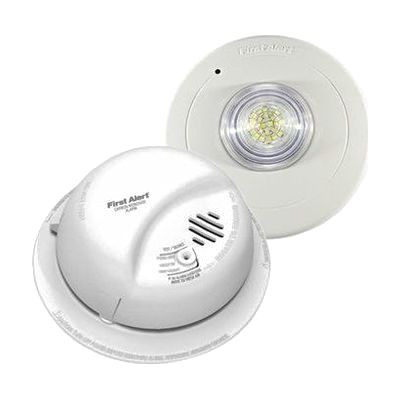
First Alert CO5120BN Hard-Wired Carbon Monoxide Alarm + SLED177 Strobe Light
by First Alert
Last verified June 16, 2026 · classified April 26, 2026
What it is
Summary
AI-generated from vendor-published content · April 26, 2026
This kit pairs a hard-wired carbon monoxide detector with a bright strobe light that flashes visually when the CO alarm triggers — making the warning accessible to people who are deaf or hard of hearing and may not reliably hear the audible horn. It's designed for someone who needs a visual alert system in their home or facility, not just an audible one. The CO alarm installs permanently into household wiring with battery backup, and the strobe connects to flash whenever the alarm activates; this is a complete alerting solution for one room, though multi-room coverage would require additional strobe units. Hard-wired installation means you'll need an electrician if you're not comfortable with household wiring, and the strobe is a separate component that must be positioned where it will actually be seen during sleep or rest.
Quick Facts Catalog facts · auto-generated
- AT Act lending
- Medicaid waiver
- Out of pocket
What Setup Looks Like
- With a guide
- Turn off power at the circuit breaker before beginning installation.
- Wire the CO5120BN into an existing hard-wired alarm circuit or junction box following the included wiring diagram.
- Connect the SLED177 strobe to the alarm's signaling output according to manufacturer instructions.
- Restore power and test both the audible horn and strobe flash together. Allow 30-60 minutes total for a confident DIY installation. See manufacturer support resources for detailed instructions.
- With professional help
- Hire a licensed electrician if no existing hard-wired alarm circuit is present or if adding new wiring.
- For whole-home visual alerting coverage, an audiologist or hearing loss specialist can recommend how many strobe units are needed and where to place them.
Getting it
Try Before You Buy
Devices like this are often available to borrow through your state's AT Act program — typically free or low-cost — so you can try it before buying or pursuing funding.
Where to Get It
Some links may be affiliate links — WhatCanHelp may earn a small commission from purchases at no extra cost to you. More on affiliates →
As an Amazon Associate we earn from qualifying purchases.
How to Fund This
Equipment like this is often pursued through official state programs. These are common starting points — each program decides its own eligibility and what it covers, so the first step is always a phone call.
Compare & explore
Sources & fine print
Vendor facts (name, price, platforms, vendor link) sourced from First Alert — view on vendor site; last verified June 16, 2026.
Classification & description AI-generated from vendor-published content on April 26, 2026 · confidence: high. Vendor specs may lag; verify before relying on details in a clinical or funding artifact.