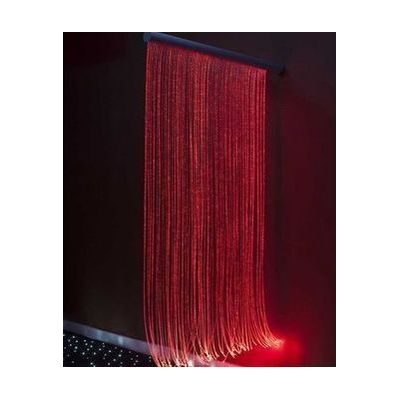
Sensory Wall Cascade
Price is what the vendor listed when last checked. Confirm it with the vendor before buying.
Last verified June 26, 2026 · classified April 26, 2026
What it is
Summary
AI-generated from vendor-published content · April 26, 2026
This is a large fiber optic wall display — a cascade of 66 long polymer strands that glow and shift through colors via an LED light source with a remote control. It's designed for sensory rooms or calm-down spaces where the slow, changing light helps people who benefit from visual stimulation or calming input, including individuals with autism, sensory processing differences, or significant cognitive and physical disabilities. You get a complete installation kit including an aluminum tube, fiber harness, color wheel, mounting brackets, and instructions — but this does require wall mounting and an AC outlet, so budget time for physical installation. At nearly six and a half feet tall and over $1,400, this is a room feature, not a portable tool, so it works best as part of a purpose-built sensory environment rather than a single-user intervention.
Quick Facts Catalog facts · auto-generated
- AT Act lending
- Medicaid waiver
- Out of pocket
- School district
What Setup Looks Like
- With a guide
- Mount the aluminum tube and light source bracket to a wall using the included mounting hardware and instructions.
- Attach the fiber harness to the tube and connect to the LED light source unit.
- Plug the light source into a standard 120V AC outlet and use the remote to cycle through color settings.
- Full installation typically takes 1-2 hours with two people. See manufacturer support resources for detailed instructions.
- With professional help
- An occupational therapist (OT) or sensory integration specialist can advise on placement within a sensory room and how to incorporate the cascade into a broader sensory diet or calming protocol.
- If integrated into a school or clinical sensory room, expect 1 session to configure the environment for targeted therapeutic goals.
Getting it
Try Before You Buy
Devices like this are often available to borrow through your state's AT Act program — typically free or low-cost — so you can try it before buying or pursuing funding.
Where to Get It
This is the vendor WhatCanHelp tracks for this product — it may also be available from other retailers or a local supplier, and prices vary.
Some links may be affiliate links — WhatCanHelp may earn a small commission from purchases at no extra cost to you. More on affiliates →
As an Amazon Associate we earn from qualifying purchases.
How to Fund This
Equipment like this is often pursued through official state programs. These are common starting points — each program decides its own eligibility and what it covers, so the first step is always a phone call.
Compare & explore
Sources & fine print
Vendor facts (name, price, platforms, vendor link) sourced from Enabling Devices — view on vendor site; last verified June 26, 2026.
Classification & description AI-generated from vendor-published content on April 26, 2026 · confidence: high. Vendor specs may lag; verify before relying on details in a clinical or funding artifact.