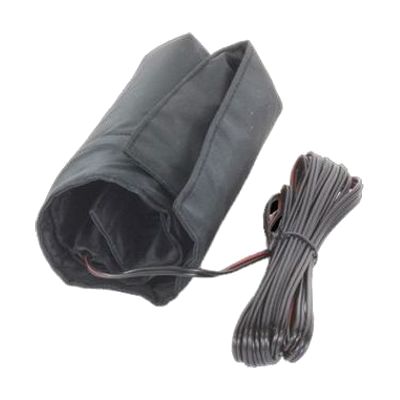
New Power Loop Mat
Price is what the vendor listed when last checked. Confirm it with the vendor before buying.
Accessory or replacement part Made to go with another product — check it fits what you have.
Last verified September 18, 2026 · classified April 26, 2026
What it is
Summary
AI-generated from vendor-published content · April 26, 2026
This is a flat, 14-inch square loop mat that generates a magnetic field for hearing aid users whose devices have a telecoil (t-coil) setting. When placed under a counter or used as a chair pad and connected to a compatible loop amplifier (sold separately), it creates roughly a 3x3-foot zone where t-coil-equipped hearing aids can pick up audio directly — cutting out background noise and distance entirely. It's designed for point-of-service settings like pharmacy windows, ticket booths, and bank teller counters, or for portable use at small meeting tables. This mat is just one piece of the system — it requires a compatible loop amplifier such as the Williams Sound PLA 240 to actually work, and that amplifier is not included.
Quick Facts Catalog facts · auto-generated
- Insurance
- Out of pocket
What Setup Looks Like
- With a guide
- Confirm your amplifier (e.g., Williams Sound PLA 240) is compatible with this loop mat.
- Place the mat flat under a non-metal counter surface or on a chair seat.
- Connect the 16-foot lead wire to the loop amplifier's output terminals.
- Test the field with a t-coil-enabled hearing aid to confirm signal strength — allow 15–30 minutes for installation and testing. See manufacturer support resources for detailed instructions.
- With professional help
- An audiologist or hearing loop installer can verify field strength, check for interference, and ensure ADA compliance for public-facing installations.
- Budget 1–2 hours for a professional site assessment in commercial settings.
Getting it
Many states lend devices like this for free trial periods — find your state's AT lending program.
Where to Get It
This is the vendor WhatCanHelp tracks for this product — it may also be available from other retailers or a local supplier, and prices vary.
Some links may be affiliate links — WhatCanHelp may earn a small commission from purchases at no extra cost to you. More on affiliates →
As an Amazon Associate we earn from qualifying purchases.
Wondering how equipment like this gets paid for? See the official funding programs in your state.
Compare & explore
Sources & fine print
Vendor facts (name, price, platforms, vendor link) sourced from Williams Sound — view on vendor site; last verified September 18, 2026.
Classification & description AI-generated from vendor-published content on April 26, 2026 · confidence: high. Vendor specs may lag; verify before relying on details in a clinical or funding artifact.