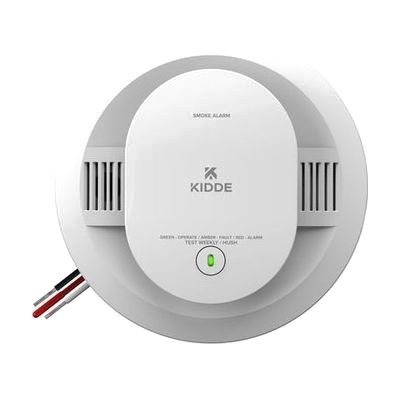
SMOKE ALARM - HARDWIRED WITH AA BACKUP BATTERY
by Kidde
Last verified June 17, 2026 · classified April 26, 2026
What it is
Summary
AI-generated from vendor-published content · April 26, 2026
This is a standard hardwired smoke alarm that connects to your home's 120V AC wiring with AA battery backup for power outages — it's listed by MaxiAids because it serves as a base component in home safety setups for people who are deaf or hard of hearing, typically paired with a separate alerting system (like a strobe flasher or bed shaker) that connects to interconnected alarm networks. The interconnect feature means when one alarm triggers, all linked alarms in the home activate simultaneously, which is important for people who may not hear a distant alarm. This is not itself a visual or tactile alert device — it produces only standard audible beeps and LED flashes, so it must be paired with a compatible alerting receiver to provide non-auditory warnings. MaxiAids carries this specifically for interconnected alarm networks, but you'll need to separately purchase a visual/tactile alerting device that can receive the interconnect signal to make this setup accessible for someone with hearing loss.
Quick Facts Catalog facts · auto-generated
- AT Act lending
- Out of pocket
What Setup Looks Like
- Out of the box
Insert AA backup batteries and test the alarm by pressing the test button — audible function works immediately. - With a guide
- Turn off circuit breaker for the installation location before wiring.
- Connect to 120V AC wiring using the included mounting bracket (twist-and-click).
- Link to other interconnected alarms in the home via the interconnect wire.
- Allow 15–30 minutes for a confident DIY installation with the included instructions — or hire an electrician if unfamiliar with home wiring. See manufacturer support resources for detailed instructions.
- With professional help
- An electrician is needed if wiring interconnected alarms throughout a multi-room home or if existing wiring is not compatible.
- A hearing technology specialist or ATP can advise on which compatible visual/tactile alerting receiver to pair with this alarm for deaf/hard of hearing users.
Getting it
Try Before You Buy
Devices like this are often available to borrow through your state's AT Act program — typically free or low-cost — so you can try it before buying or pursuing funding.
Where to Get It
Some links may be affiliate links — WhatCanHelp may earn a small commission from purchases at no extra cost to you. More on affiliates →
As an Amazon Associate we earn from qualifying purchases.
Wondering how equipment like this gets paid for? See the official funding programs in your state.
Compare & explore
Sources & fine print
Vendor facts (name, price, platforms, vendor link) sourced from Kidde — view on vendor site; last verified June 17, 2026.
Classification & description AI-generated from vendor-published content on April 26, 2026 · confidence: medium. Vendor specs may lag; verify before relying on details in a clinical or funding artifact.