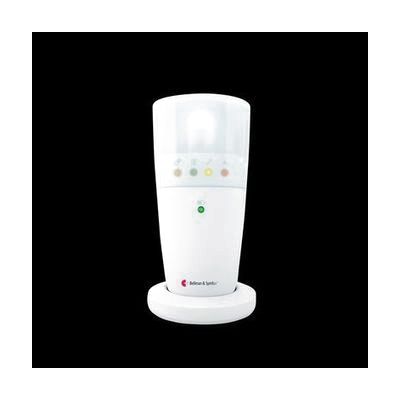
Bellman Flash Receiver
Price is what the vendor listed when last checked. Confirm it with the vendor before buying.
Accessory or replacement part Made to go with another product — check it fits what you have.
Last verified September 19, 2026 · classified April 26, 2026
What it is
Summary
AI-generated from vendor-published content · April 26, 2026
The Flash Receiver is a visual alert unit that plugs into a wall outlet and produces bright xenon flashes along with color-coded LED indicators when it receives a wireless signal from a paired Bellman & Symfon Visit transmitter — letting someone who is deaf or hard of hearing know about doorbells, phone calls, smoke alarms, or other household events. It's designed for anyone with significant hearing loss who needs a reliable visual or tactile way to stay aware of what's happening around the home, day or night. This is not a standalone product — it works only as part of the Bellman & Symfon Visit system, and you'll need to purchase one or more compatible Visit transmitters separately for each event type you want monitored; an optional bed shaker (also sold separately) can plug directly into the receiver for nighttime alerts. The rotating head lets you aim the flash where it's most visible, and the built-in rechargeable battery backup keeps it running for roughly 48 hours during a power outage.
Quick Facts Catalog facts · auto-generated
- Out of pocket
What Setup Looks Like
- Out of the box
- Plug the Flash Receiver into a wall outlet — the battery backup begins charging automatically.
- Rotate the head to aim the flashing light toward your typical viewing area.
- With a guide
- Pair each Bellman & Symfon Visit transmitter (doorbell, phone, smoke detector, etc.) to the receiver following the pairing instructions in the user manual.
- Test each transmitter to confirm the receiver flashes with the correct color code for that alert type.
- If adding a bed shaker, connect it to the receiver's output port and test nighttime alerts — allow 30–60 minutes total setup. See manufacturer support resources for detailed instructions.
Getting it
Many states lend devices like this for free trial periods — find your state's AT lending program.
Where to Get It
This is the vendor WhatCanHelp tracks for this product — it may also be available from other retailers or a local supplier, and prices vary.
Some links may be affiliate links — WhatCanHelp may earn a small commission from purchases at no extra cost to you. More on affiliates →
As an Amazon Associate we earn from qualifying purchases.
Wondering how equipment like this gets paid for? See the official funding programs in your state.
Compare & explore
Sources & fine print
Vendor facts (name, price, platforms, vendor link) sourced from Bellman & Symfon — view on vendor site; last verified September 19, 2026.
Classification & description AI-generated from vendor-published content on April 26, 2026 · confidence: high. Vendor specs may lag; verify before relying on details in a clinical or funding artifact.