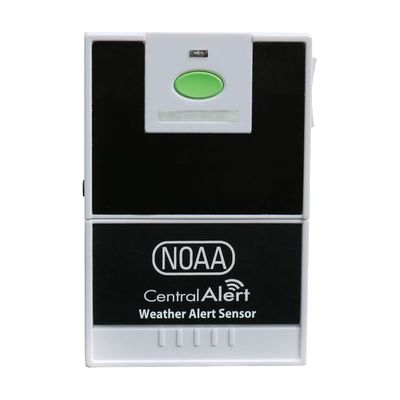
Serene CentralAlert NOAA Weather Alert
Price is what the vendor listed when last checked. Confirm it with the vendor before buying.
Accessory or replacement part Made to go with another product — check it fits what you have.
Last verified September 19, 2026 · classified April 26, 2026
What it is
Summary
AI-generated from vendor-published content · April 26, 2026
This sensor bridges your existing NOAA weather radio and the Serene CentralAlert home alerting system, wirelessly detecting weather warning signals and triggering the CentralAlert base unit to flash lights or vibrate — so people who are deaf or hard of hearing receive the same emergency weather alerts that a hearing person would catch by ear. It's designed for someone who already uses (or is setting up) a CentralAlert whole-home alerting system and wants to add weather emergency coverage to their existing visual/tactile notification setup. This is a component, not a standalone product — it requires a compatible CentralAlert receiver (CA-360, CA-380, CA-PX, or CA-RX) and a separate NOAA weather radio; neither is included. Be aware that the sensor only reacts to signals from the NOAA radio placed near it, so placement and NOAA radio reception quality in your area will directly affect reliability.
Quick Facts Catalog facts · auto-generated
- Out of pocket
What Setup Looks Like
- Out of the box
Place the sensor near your NOAA weather radio — it passively detects alert signals without any pairing steps once the CentralAlert system is already installed. - With a guide
- Confirm you have a compatible CentralAlert receiver (CA-360, CA-380, CA-PX, or CA-RX) already set up and functioning.
- Position the NOAA sensor adjacent to your weather radio and verify it wirelessly links to the CentralAlert base unit.
- Test by triggering a weather alert (or using a test tone) to confirm lights or vibration activate — allow 15–30 minutes for full verification. See manufacturer support resources for detailed instructions.
Getting it
Many states lend devices like this for free trial periods — find your state's AT lending program.
Where to Get It
This is the vendor WhatCanHelp tracks for this product — it may also be available from other retailers or a local supplier, and prices vary.
Some links may be affiliate links — WhatCanHelp may earn a small commission from purchases at no extra cost to you. More on affiliates →
As an Amazon Associate we earn from qualifying purchases.
Wondering how equipment like this gets paid for? See the official funding programs in your state.
Compare & explore
Sources & fine print
Vendor facts (name, price, platforms, vendor link) sourced from Serene Innovations — view on vendor site; last verified September 19, 2026.
Classification & description AI-generated from vendor-published content on April 26, 2026 · confidence: high. Vendor specs may lag; verify before relying on details in a clinical or funding artifact.