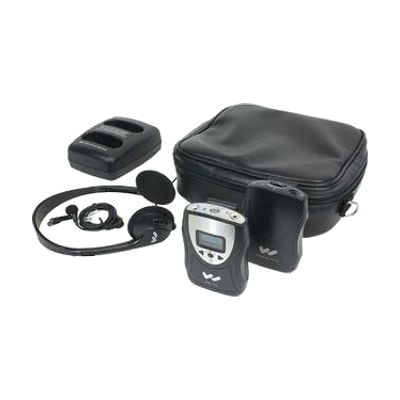
Williams Sound PFM PRO RCH Personal Wireless FM Listening System
Last verified July 28, 2026 · classified May 23, 2026
What it is
Summary
AI-generated from vendor-published content · May 23, 2026
A personal FM listening system that wirelessly transmits sound from a microphone or audio source directly to a receiver worn or held by the listener, bypassing the distance and background noise that makes hearing difficult. It's designed for someone who struggles to follow conversations in noisy environments, classrooms, meetings, or at home watching TV — whether or not they wear hearing aids. The kit is complete as shipped: you get the transmitter, receiver, lavalier mic, earphone, folding headphones, audio input cable, and a dual drop-in charger for recharging both units. The 72-76 MHz FM band with 17 selectable channels gives useful flexibility in environments where other FM systems might be in use, and the 150-foot range covers most real-world listening situations. The receiver's 3.5mm output works with earphones, headphones, or a neckloop for telecoil-equipped hearing aids — but choosing the right coupling option for hearing aid users typically benefits from guidance from an audiologist or hearing specialist.
Quick Facts Catalog facts · auto-generated
- AT Act lending
- Insurance
- Medicaid waiver
- Out of pocket
- School district
- Vocational rehab
What Setup Looks Like
- Out of the box
- Insert batteries or charge transmitter and receiver using the included dual drop-in charger.
- Clip the lavalier mic to the speaker's lapel and connect to the transmitter.
- Tune transmitter and receiver to the same channel, then plug in earphone or headphones to start listening.
- With a guide
- If using with a hearing aid via neckloop (telecoil), switch the hearing aid to T-mode and connect the neckloop to the 3.5mm jack on the receiver.
- To broadcast a TV or audio device, use the included audio input cable to connect the transmitter's aux input to the audio source's headphone or line-out jack.
- Allow approximately 30 minutes to configure channels and test range in the intended environment. See manufacturer support resources for detailed instructions.
- With professional help
- An audiologist or hearing instrument specialist can recommend the optimal receiver coupling method (earphone, headphones, or neckloop) based on the listener's degree of hearing loss and hearing aid type.
- For classroom or workplace deployment, an AT specialist or audiologist can advise on channel selection to avoid interference with other FM systems in use.
Getting it
Try Before You Buy
Devices like this are often available to borrow through your state's AT Act program — typically free or low-cost — so you can try it before buying or pursuing funding.
Where to Get It
This is the vendor WhatCanHelp tracks for this product — it may also be available from other retailers or a local supplier, and prices vary.
Some links may be affiliate links — WhatCanHelp may earn a small commission from purchases at no extra cost to you. More on affiliates →
As an Amazon Associate we earn from qualifying purchases.
How to Fund This
Equipment like this is often pursued through official state programs. These are common starting points — each program decides its own eligibility and what it covers, so the first step is always a phone call.
Compare & explore
Sources & fine print
Vendor facts (name, price, platforms, vendor link) sourced from Williams Sound — view on vendor site; last verified July 28, 2026.
Classification & description AI-generated from vendor-published content on May 23, 2026 · confidence: high. Vendor specs may lag; verify before relying on details in a clinical or funding artifact.