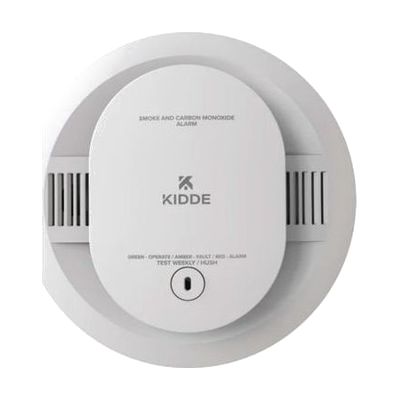
Kidde Talking Smoke, Fire and Carbon Monoxide Alarm
by Kidde
Last verified June 17, 2026 · classified May 23, 2026
What it is
Summary
AI-generated from vendor-published content · May 23, 2026
This combination smoke, fire, and carbon monoxide detector announces the specific type of hazard by voice — saying 'Warning: Carbon Monoxide,' 'Fire, Fire,' or 'Low Battery' — rather than just sounding a generic alarm tone. That voice announcement is the key feature for people who are deaf or hard of hearing, have cognitive disabilities, or anyone who may not reliably distinguish between different alarm patterns when startled awake. It's a complete, battery-operated unit (2 AA included) that mounts to a wall or ceiling without wiring — no additional hardware needed. The 85 dB alarm is loud but not exceptional; people with significant hearing loss will likely need this paired with a bed shaker or strobe alerting system for reliable overnight coverage.
Quick Facts Catalog facts · auto-generated
- AT Act lending
- Medicaid waiver
- Out of pocket
What Setup Looks Like
- Out of the box
- Install 2 AA batteries (included).
- Mount to wall or ceiling using included hardware — no wiring required.
- Test the alarm to verify voice announcements are audible in the intended room.
Getting it
Try Before You Buy
Devices like this are often available to borrow through your state's AT Act program — typically free or low-cost — so you can try it before buying or pursuing funding.
Where to Get It
Some links may be affiliate links — WhatCanHelp may earn a small commission from purchases at no extra cost to you. More on affiliates →
How to Fund This
Equipment like this is often pursued through official state programs. These are common starting points — each program decides its own eligibility and what it covers, so the first step is always a phone call.
Compare & explore
Sources & fine print
Vendor facts (name, price, platforms, vendor link) sourced from Kidde — view on vendor site; last verified June 17, 2026.
Classification & description AI-generated from vendor-published content on May 23, 2026 · confidence: high. Vendor specs may lag; verify before relying on details in a clinical or funding artifact.