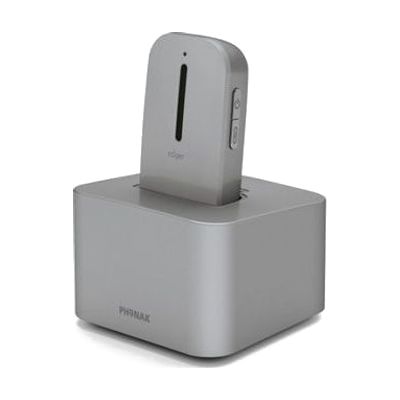
Phonak Roger Clip-On Mic | Wearable Remote Microphone Transmitter
by Phonak
Price is what the vendor listed when last checked. Confirm it with the vendor before buying.
Accessory or replacement part Made to go with another product — check it fits what you have.
Last verified September 16, 2026 · classified May 31, 2026
What it is
Summary
AI-generated from vendor-published content · May 31, 2026
The Roger Clip-On Mic is a small transmitter that someone clips to their shirt or a conversation partner's collar, capturing speech and wirelessly sending it to Roger-compatible hearing aid receivers. It uses beamforming — directional microphone processing — to focus on the speaker's voice and reduce background noise, which is exactly what hearing aids alone struggle with in places like crowded restaurants or large family gatherings. This is a transmitter only: it does nothing without a separate Roger receiver (such as the Roger X or Roger Neckloop) connected to or programmed into the listener's hearing aids, and those receivers are sold separately and add significant cost. It also includes an audio input jack for connecting directly to a TV or other media device, which expands its usefulness beyond just person-to-person communication.
Quick Facts Catalog facts · auto-generated
- Insurance
- Out of pocket
- Vocational rehab
What Setup Looks Like
- Out of the box
Clip the mic to a shirt collar or lanyard — transmits immediately when paired with a compatible Roger receiver. - With a guide
- Purchase and pair a compatible Roger receiver (Roger X or Roger Neckloop) separately — these are NOT included.
- Follow Phonak pairing instructions to connect the receiver to your hearing aids or cochlear implant processor.
- Allow 30–60 minutes for initial receiver pairing and range testing. See manufacturer support resources for detailed instructions.
- With professional help
- An audiologist must verify that your hearing aids support Roger receivers and program the receiver into your hearing aids as a program or automatic input.
- Expect 1–2 audiology visits to configure and optimize the system for your listening environments.
Getting it
Many states lend devices like this for free trial periods — find your state's AT lending program.
Where to Get It
This is the vendor WhatCanHelp tracks for this product — it may also be available from other retailers or a local supplier, and prices vary.
Some links may be affiliate links — WhatCanHelp may earn a small commission from purchases at no extra cost to you. More on affiliates →
As an Amazon Associate we earn from qualifying purchases.
How to Fund This
Equipment like this is often pursued through official state programs. These are common starting points — each program decides its own eligibility and what it covers, so the first step is always a phone call.
Compare & explore
Sources & fine print
Vendor facts (name, price, platforms, vendor link) sourced from Phonak — view on vendor site; last verified September 16, 2026.
Classification & description AI-generated from vendor-published content on May 31, 2026 · confidence: high. Vendor specs may lag; verify before relying on details in a clinical or funding artifact.