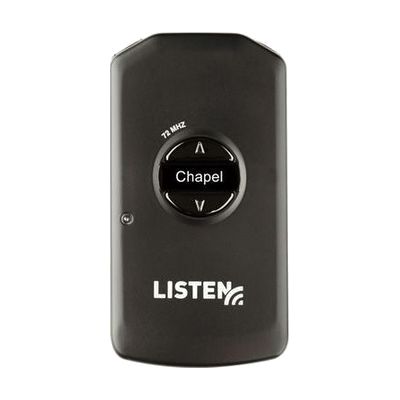
Listen Tech Meeting House Receiver | MH-4200-072
Price is what the vendor listed when last checked. Confirm it with the vendor before buying.
Last verified September 16, 2026 · classified May 31, 2026
What it is
Summary
AI-generated from vendor-published content · May 31, 2026
The MH-4200-072 is a portable FM/infrared receiver designed for use in houses of worship and meeting spaces, allowing someone with hearing loss to tune into an installed assistive listening system and hear speech or audio clearly through earphones or a neck loop. It includes both a standard 3.5mm headphone jack and a neck loop with a built-in telecoil driver, so it works for people who use hearing aids with T-coil settings without needing separate accessories. The unit has an OLED display for channel navigation and a rechargeable lithium-ion battery, making it practical for venues that loan receivers to congregants each week. This is a receiver only — it requires a compatible Listen Technologies transmitter and antenna system already installed in the venue to function, so it's not a standalone product.
Quick Facts Catalog facts · auto-generated
- AT Act lending
- Insurance
- Out of pocket
What Setup Looks Like
- Out of the box
Insert the neck loop or plug in earphones, select the correct channel on the OLED display, and listen. - With a guide
- Charge the unit via Micro USB before first use.
- Use the channel select button to find the active transmission channel for the venue.
- Pair neck loop or earphones to appropriate output jack based on user's hearing aid or listening preference — allow 15–30 minutes for first-time familiarization.
- See manufacturer support resources for detailed instructions.
- With professional help
- An AV integrator or assistive listening system installer must have a compatible Listen Technologies transmitter infrastructure in place before this receiver can be used.
- A hearing care professional or ATP can advise whether T-coil (neck loop) or direct audio (earphone) mode is preferable for a given user's hearing aids.
Getting it
Try Before You Buy
Devices like this are often available to borrow through your state's AT Act program — typically free or low-cost — so you can try it before buying or pursuing funding.
Where to Get It
This is the vendor WhatCanHelp tracks for this product — it may also be available from other retailers or a local supplier, and prices vary.
Some links may be affiliate links — WhatCanHelp may earn a small commission from purchases at no extra cost to you. More on affiliates →
As an Amazon Associate we earn from qualifying purchases.
Wondering how equipment like this gets paid for? See the official funding programs in your state.
Compare & explore
Sources & fine print
Vendor facts (name, price, platforms, vendor link) sourced from Listen Technologies — view on vendor site; last verified September 16, 2026.
Classification & description AI-generated from vendor-published content on May 31, 2026 · confidence: high. Vendor specs may lag; verify before relying on details in a clinical or funding artifact.