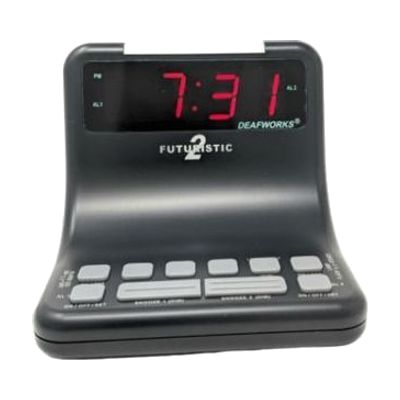
DEAFWORKS Futuristic 2 | Deaf Alarm Clock | Silent, Flashing Lights
by DEAFWORKS
Last verified June 16, 2026 · classified May 31, 2026
What it is
Summary
AI-generated from vendor-published content · May 31, 2026
A dual-alarm clock built specifically for deaf and hard-of-hearing users, relying on bright flashing or steady light output rather than sound to wake someone up. The unit has two 120V outlets on the back — one to connect a lamp for visual alerts, one for a bed shaker — so you can use light, vibration, or both depending on what wakes you reliably. Two separate alarms and dual USB charging ports round out the package. Note that the bed shaker and lamp are sold separately; this clock is the controller, not a complete wake-up system on its own.
Quick Facts Catalog facts · auto-generated
- AT Act lending
- Out of pocket
What Setup Looks Like
- Out of the box
Plug the clock into a wall outlet, set the time and both alarms using the front controls, and the built-in LED flasher works immediately. - With a guide
- Plug a lamp or strobe (sold separately) into the rear 120V lamp outlet and configure the Flashing or Steady mode via the mode selector.
- Plug a bed vibrator (sold separately) into the second rear 120V outlet so it activates when the alarm fires.
- Insert a backup battery to preserve time during power outages — battery is not included.
- Allow 20–30 minutes for full setup. See DEAFWORKS support resources for detailed instructions.
Getting it
Try Before You Buy
Devices like this are often available to borrow through your state's AT Act program — typically free or low-cost — so you can try it before buying or pursuing funding.
Where to Get It
Some links may be affiliate links — WhatCanHelp may earn a small commission from purchases at no extra cost to you. More on affiliates →
Wondering how equipment like this gets paid for? See the official funding programs in your state.
Compare & explore
Sources & fine print
Vendor facts (name, price, platforms, vendor link) sourced from DEAFWORKS — view on vendor site; last verified June 16, 2026.
Classification & description AI-generated from vendor-published content on May 31, 2026 · confidence: high. Vendor specs may lag; verify before relying on details in a clinical or funding artifact.