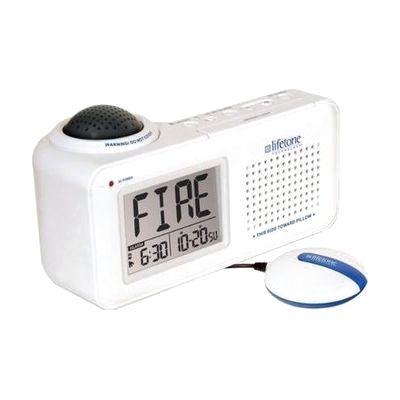
Lifetone Fire Alarm | Vibrating, Low Frequency | Deaf, Hearing Impaired
by Lifetone
Last verified June 16, 2026 · classified May 31, 2026
What it is
Summary
AI-generated from vendor-published content · May 31, 2026
The Lifetone HL listens for the T3 smoke alarm pattern (three beeps, then a pause) and responds with three simultaneous alerts: a 520Hz low-frequency alarm tone at 85dB, a spoken "Fire! Get out!" voice alert, and bed-shaking vibration. That combination matters because standard high-pitched smoke alarms are notoriously difficult to wake deaf, hard-of-hearing, or heavy-sleeping individuals — the low-frequency square wave is clinically shown to be more effective at rousing sleeping people than the typical 3100Hz alarm. This sits on a nightstand and functions as both a clock and a fire alert receiver — it's not a smoke detector, so your existing smoke alarms stay in place and this monitors their audio output. Critical compatibility note: it only works with alarms that use the standard T3 pattern. Carbon monoxide detectors and continuous-tone smoke alarms won't trigger it, so verify your existing detectors before purchase.
Quick Facts Catalog facts · auto-generated
- AT Act lending
- Medicaid waiver
- Out of pocket
What Setup Looks Like
- Out of the box
Place the unit on your nightstand and plug in — the clock function works immediately. - With a guide
- Verify your smoke alarms use the T3 pattern (three beeps + pause) — check alarm documentation or contact Lifetone support.
- Position the unit near your bed with the vibration pad under your pillow or mattress.
- Test the system by triggering your smoke alarm to confirm the Lifetone responds correctly — allow 15–30 minutes for full setup and testing.
- See manufacturer support resources and the setup video linked on the product page for detailed instructions.
Getting it
Try Before You Buy
Devices like this are often available to borrow through your state's AT Act program — typically free or low-cost — so you can try it before buying or pursuing funding.
Where to Get It
Some links may be affiliate links — WhatCanHelp may earn a small commission from purchases at no extra cost to you. More on affiliates →
How to Fund This
Equipment like this is often pursued through official state programs. These are common starting points — each program decides its own eligibility and what it covers, so the first step is always a phone call.
Compare & explore
Sources & fine print
Vendor facts (name, price, platforms, vendor link) sourced from Lifetone — view on vendor site; last verified June 16, 2026.
Classification & description AI-generated from vendor-published content on May 31, 2026 · confidence: high. Vendor specs may lag; verify before relying on details in a clinical or funding artifact.