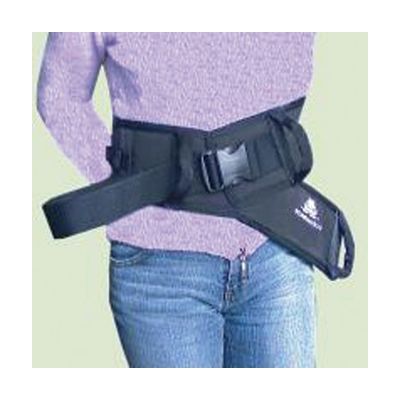
SafetySure Transfer Belt -Standard Medium
by SafetySure
Price is what the vendor listed when last checked. Confirm it with the vendor before buying.
Last verified September 20, 2026 · classified June 9, 2026
What it is
Summary
AI-generated from vendor-published content · June 9, 2026
A padded canvas belt worn around the waist that gives caregivers a secure handhold during transfers — moving someone from bed to wheelchair, wheelchair to toilet, or helping them stand up safely. The medium size fits waists 32–48 inches and has five grip handles positioned around the belt so caregivers can adjust their hold depending on the transfer direction. An anti-slip lining keeps it from riding up during use, and the buckle system lets a caregiver snug it tighter once the person is already standing without fully undoing it. This is a complete, ready-to-use solution — no setup required. Caregivers with no formal training can use it effectively, but anyone new to transfer techniques should get at least a brief demonstration from a physical therapist or home health aide, since improper lifting technique can injure both the caregiver and the person being transferred.
Quick Facts Catalog facts · auto-generated
- AT Act lending
- Medicaid waiver
- Out of pocket
What Setup Looks Like
- Out of the box
- Place belt around the person's waist over clothing, centered above the hips.
- Thread and fasten the fix-lock buckle, then snug it down once the person is standing.
- Grip one or more of the five handles to guide or support the transfer.
- With professional help
- A physical therapist (PT) or occupational therapist (OT) can demonstrate safe transfer mechanics and proper grip placement — typically covered in one session.
- Recommended especially when the person being transferred has significant weakness, spasticity, or unpredictable balance.
Getting it
Try Before You Buy
Devices like this are often available to borrow through your state's AT Act program — typically free or low-cost — so you can try it before buying or pursuing funding.
Where to Get It
This is the vendor WhatCanHelp tracks for this product — it may also be available from other retailers or a local supplier, and prices vary.
Some links may be affiliate links — WhatCanHelp may earn a small commission from purchases at no extra cost to you. More on affiliates →
As an Amazon Associate we earn from qualifying purchases.
How to Fund This
Equipment like this is often pursued through official state programs. These are common starting points — each program decides its own eligibility and what it covers, so the first step is always a phone call.
Compare & explore
Sources & fine print
Vendor facts (name, price, platforms, vendor link) sourced from SafetySure — view on vendor site; last verified September 20, 2026.
Classification & description AI-generated from vendor-published content on June 9, 2026 · confidence: high. Vendor specs may lag; verify before relying on details in a clinical or funding artifact.