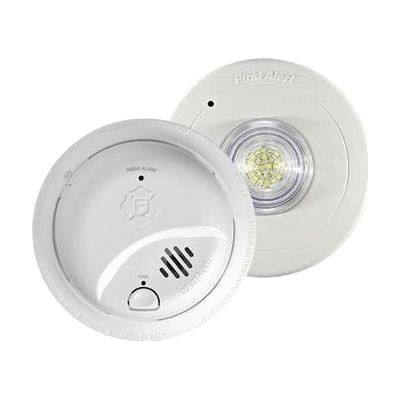
BRK First Alert SMI100-AC Hardwired Smoke Alarm w/ Battery Backup
by First Alert
Last verified July 4, 2026 · classified July 7, 2026
What it is
Summary
AI-generated from vendor-published content · July 7, 2026
This hardwired smoke alarm includes a built-in strobe light (the SLED177) that flashes visually when smoke is detected — making it relevant for people who are deaf or hard of hearing and wouldn't reliably hear an audible alarm alone. It wires into your home's electrical system with battery backup for outage coverage, and can interconnect with up to 12 other compatible First Alert/BRK units so that when one alarm triggers, all of them flash and sound simultaneously. The strobe integration is built into the unit itself, which simplifies installation compared to buying a separate strobe add-on. One limitation: this is a single-point alerting device — for whole-home coverage for a deaf user, you'd typically also want a dedicated bed shaker or under-pillow vibrator tied into the system, since a strobe alone may not wake a sleeping person.
Quick Facts Catalog facts · auto-generated
- AT Act lending
- Out of pocket
What Setup Looks Like
- Out of the box
Test the strobe and alarm function using the Test/Silence button once installed. - With a guide
- Turn off circuit breaker for the installation location.
- Connect to existing wiring using the included Quick Connect Plug — no rewiring required for compatible installations.
- Mount to ceiling or wall, restore power, and test interconnect with other alarms in the home.
- Allow 30–60 minutes for a typical single-unit installation; see manufacturer support resources for detailed instructions.
- With professional help
- An electrician should handle installation if no compatible wiring exists or if running new interconnect wiring between multiple units.
- A deaf/hard-of-hearing AT specialist or audiologist can advise on supplemental alerting (bed shakers, whole-home visual alert systems) to pair with this unit.
Getting it
Try Before You Buy
Devices like this are often available to borrow through your state's AT Act program — typically free or low-cost — so you can try it before buying or pursuing funding.
Where to Get It
Some links may be affiliate links — WhatCanHelp may earn a small commission from purchases at no extra cost to you. More on affiliates →
Wondering how equipment like this gets paid for? See the official funding programs in your state.
Compare & explore
Sources & fine print
Vendor facts (name, price, platforms, vendor link) sourced from First Alert — view on vendor site; last verified July 4, 2026.
Classification & description AI-generated from vendor-published content on July 7, 2026 · confidence: high. Vendor specs may lag; verify before relying on details in a clinical or funding artifact.