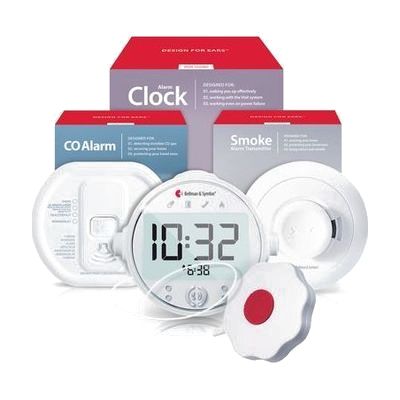
Smoke, Fire, & CO ADA Compliance Kit with Alarm Clock Receiver
Last verified July 4, 2026 · classified July 7, 2026
What it is
Summary
AI-generated from vendor-published content · July 7, 2026
This kit provides complete life-safety alerting for people who are deaf, hard of hearing, or who sleep deeply enough that standard auditory alarms aren't reliable. When smoke, fire heat, or carbon monoxide is detected, the system triggers high-intensity LED flashes, a loud audio alarm, and a bed shaker simultaneously — covering someone who's asleep just as effectively as someone awake. The bundle arrives factory-paired with no Wi-Fi, apps, or manual configuration required: a smoke/fire transmitter, a CO transmitter, an alarm clock receiver with battery backup, and a bed shaker. That 'no pairing needed' detail matters a lot in group housing, shelter programs, or anywhere staff are deploying units across multiple rooms quickly. The main limitation is scope — this covers one sleeping area; protecting a larger home or facility with multiple bedrooms requires additional transmitters and receivers purchased separately.
Quick Facts Catalog facts · auto-generated
- AT Act lending
- Medicaid waiver
- Out of pocket
What Setup Looks Like
- Out of the box
- Mount the smoke/fire transmitter and CO transmitter in appropriate locations per code (ceiling for smoke, near sleeping area for CO).
- Place the alarm clock receiver on a nightstand and connect the bed shaker under the mattress.
- Power on all units — transmitters and receiver are factory-paired and begin monitoring immediately.
- With a guide
- Review Bellman's installation guide to confirm transmitter placement meets local fire code requirements.
- Test each transmitter's notification pathway (smoke, CO, alarm clock) to verify LED, audio, and bed shaker all activate correctly — allow 15–20 minutes for full system test. See manufacturer support resources for detailed instructions.
Getting it
Try Before You Buy
Devices like this are often available to borrow through your state's AT Act program — typically free or low-cost — so you can try it before buying or pursuing funding.
Where to Get It
Some links may be affiliate links — WhatCanHelp may earn a small commission from purchases at no extra cost to you. More on affiliates →
How to Fund This
Equipment like this is often pursued through official state programs. These are common starting points — each program decides its own eligibility and what it covers, so the first step is always a phone call.
Compare & explore
Sources & fine print
Vendor facts (name, price, platforms, vendor link) sourced from Bellman & Symfon — view on vendor site; last verified July 4, 2026.
Classification & description AI-generated from vendor-published content on July 7, 2026 · confidence: high. Vendor specs may lag; verify before relying on details in a clinical or funding artifact.