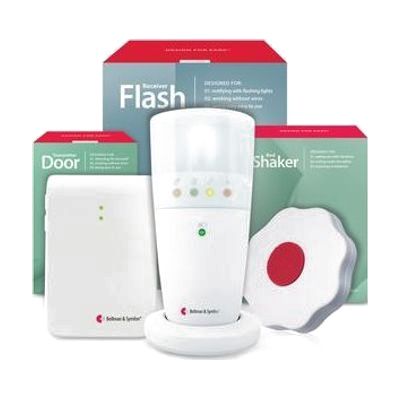
Doorbell System with Flash Receiver and Bed Shaker
Last verified July 4, 2026 · classified July 7, 2026
What it is
Summary
AI-generated from vendor-published content · July 7, 2026
This three-piece bundle converts a standard doorbell into a visual and tactile alert system — when someone rings, a wireless transmitter picks up the existing chime sound and signals a flash receiver (bright strobe light) and a bed shaker (placed under a mattress or pillow) simultaneously. It's built for people who are deaf or hard of hearing and would otherwise miss someone at the door, whether they're in another room or asleep. The whole system is self-contained and radio-frequency based, so there's no Wi-Fi, no app, and no smart home hub required. The transmitter can also be trained to recognize sounds beyond the doorbell — intercoms, buzzers — which extends its usefulness. One limitation to know: the transmitter works by acoustically detecting your existing chime, so if your chime is unusually quiet or non-standard, detection reliability can vary.
Quick Facts Catalog facts · auto-generated
- AT Act lending
- Medicaid waiver
- Out of pocket
What Setup Looks Like
- Out of the box
- Place the door transmitter near your existing doorbell chime — it listens for the chime sound and requires no wiring.
- Position the flash receiver in a visible location and the bed shaker under your pillow or mattress.
- Ring the doorbell to confirm the transmitter triggers both the flash receiver and bed shaker — full setup typically takes under 15 minutes.
- With a guide
- If the transmitter doesn't reliably detect your chime, follow the manual's training procedure to teach it your specific doorbell sound.
- Repeat the training for any additional sounds (intercom, buzzer) you want the system to recognize — allow 20–30 minutes total. See manufacturer support resources for detailed instructions.
Getting it
Try Before You Buy
Devices like this are often available to borrow through your state's AT Act program — typically free or low-cost — so you can try it before buying or pursuing funding.
Where to Get It
Some links may be affiliate links — WhatCanHelp may earn a small commission from purchases at no extra cost to you. More on affiliates →
How to Fund This
Equipment like this is often pursued through official state programs. These are common starting points — each program decides its own eligibility and what it covers, so the first step is always a phone call.
Compare & explore
Sources & fine print
Vendor facts (name, price, platforms, vendor link) sourced from Bellman & Symfon — view on vendor site; last verified July 4, 2026.
Classification & description AI-generated from vendor-published content on July 7, 2026 · confidence: high. Vendor specs may lag; verify before relying on details in a clinical or funding artifact.