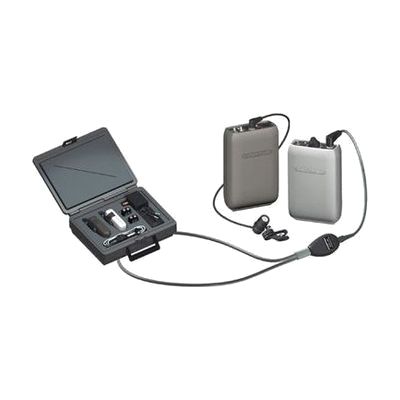
Wireless Auditory Assistance Kit with Smart-Mic
Price is what the vendor listed when last checked. Confirm it with the vendor before buying.
Last verified September 18, 2026 · classified July 16, 2026
What it is
Summary
AI-generated from vendor-published content · July 16, 2026
This is a complete FM-based remote microphone system designed primarily for classroom listening. The teacher wears a small transmitter (M-216) and speaks normally; the student with hearing loss wears a personal receiver (PR-216) with a neckloop that couples wirelessly to their hearing aids via telecoil. What sets this kit apart from standard FM systems is the included Smart-Mic: when the teacher is actively speaking through the transmitter, the receiver automatically prioritizes that signal; the moment the teacher stops, it switches to the receiver's built-in environmental mic so the student also hears classmates asking questions or commenting. This addresses the real-world classroom problem where students miss peer discussion even when they can hear the teacher clearly. The system is a complete, functional kit — transmitter, receiver, neckloop, and Smart-Mic are all included — but the user's hearing aids must have a working telecoil (t-coil) for neckloop coupling to function; without telecoil, an alternative direct audio input or Bluetooth coupling method would be needed. At this price point, an educational audiologist should be involved to confirm compatibility with the student's specific hearing aids and to optimize FM gain settings.
Quick Facts Catalog facts · auto-generated
- AT Act lending
- Insurance
- Medicaid waiver
- Out of pocket
- School district
- Vocational rehab
What Setup Looks Like
- Out of the box
- Charge or install batteries in both the M-216 transmitter and PR-216 receiver.
- Put on the neckloop, enable the telecoil program on hearing aids, and power on both units — basic audio should pass through immediately.
- With a guide
- Pair the transmitter and receiver per the Comtek AT-216 manual (channel selection and sync procedure).
- Test Smart-Mic switching behavior in a realistic room to confirm automatic prioritization is functioning as expected — allow 30–60 minutes for setup and verification. See manufacturer support resources for detailed instructions.
- With professional help
- An educational audiologist should verify telecoil coupling strength and set FM advantage (gain above hearing aid mic) to recommended +10 dB per ASHA guidelines.
- School district AT coordinator or audiologist typically completes a classroom listening check across multiple seating positions to confirm coverage — plan for one to two sessions.
Getting it
Try Before You Buy
Devices like this are often available to borrow through your state's AT Act program — typically free or low-cost — so you can try it before buying or pursuing funding.
Where to Get It
This is the vendor WhatCanHelp tracks for this product — it may also be available from other retailers or a local supplier, and prices vary.
Some links may be affiliate links — WhatCanHelp may earn a small commission from purchases at no extra cost to you. More on affiliates →
As an Amazon Associate we earn from qualifying purchases.
How to Fund This
Equipment like this is often pursued through official state programs. These are common starting points — each program decides its own eligibility and what it covers, so the first step is always a phone call.
Compare & explore
Sources & fine print
Vendor facts (name, price, platforms, vendor link) sourced from Comtek Communications — view on vendor site; last verified September 18, 2026.
Classification & description AI-generated from vendor-published content on July 16, 2026 · confidence: high. Vendor specs may lag; verify before relying on details in a clinical or funding artifact.