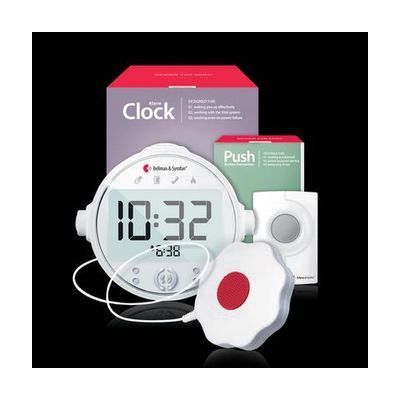
Push Notification ADA Compliance Kit with Alarm Clock
Last verified June 16, 2026 · classified April 26, 2026
What it is
Summary
AI-generated from vendor-published content · April 26, 2026
This kit combines a wireless push-button transmitter with an alarm clock receiver and bed shaker to deliver visual, auditory, and tactile alerts — so someone who is deaf or hard of hearing can be notified of a visitor or call-for-help signal even while sleeping. It's designed for hotel rooms, assisted living units, or residential spaces where ADA-compliant alerting is needed: the push button goes outside the door or at a service counter, and when pressed, the receiver flashes, sounds an alarm, and vibrates the bed shaker. Everything arrives pre-linked, so no Wi-Fi, app pairing, or manual radio programming is required before use. This is a notification and doorbell system only — it does not include smoke/CO alerting or phone ring signaling, so a complete ADA-compliant room setup would typically require additional Bellman components for those hazards.
Quick Facts Catalog facts · auto-generated
- AT Act lending
- Insurance
- Medicaid waiver
- Out of pocket
What Setup Looks Like
- Out of the box
- Remove all three components from the box — transmitter, alarm clock receiver, and bed shaker are pre-linked at the factory.
- Plug in or charge the alarm clock receiver, connect the bed shaker to the receiver's shaker port, and mount or place the push button transmitter at the door or desired location.
- Press the transmitter button once to confirm the receiver flashes, sounds, and the bed shaker activates.
- With a guide
- Review Bellman's installation guide for mounting options (wall plate, personal carry clip, or countertop placement) for the transmitter.
- Adjust receiver volume, flash intensity, and alert tone settings to match the room's needs — allow 15–30 minutes for full configuration. See manufacturer support resources for detailed instructions.
Getting it
Try Before You Buy
Devices like this are often available to borrow through your state's AT Act program — typically free or low-cost — so you can try it before buying or pursuing funding.
Where to Get It
Some links may be affiliate links — WhatCanHelp may earn a small commission from purchases at no extra cost to you. More on affiliates →
As an Amazon Associate we earn from qualifying purchases.
How to Fund This
Equipment like this is often pursued through official state programs. These are common starting points — each program decides its own eligibility and what it covers, so the first step is always a phone call.
Compare & explore
Sources & fine print
Vendor facts (name, price, platforms, vendor link) sourced from Bellman & Symfon — view on vendor site; last verified June 16, 2026.
Classification & description AI-generated from vendor-published content on April 26, 2026 · confidence: high. Vendor specs may lag; verify before relying on details in a clinical or funding artifact.