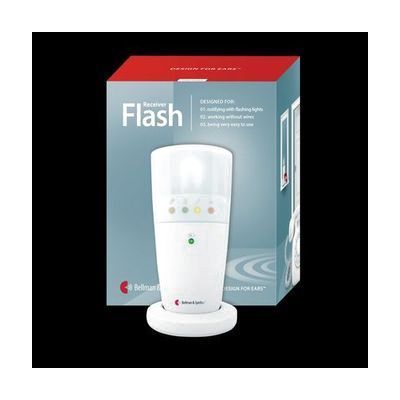
Flash Receiver
Last verified July 29, 2026 · classified April 26, 2026
What it is
Summary
AI-generated from vendor-published content · April 26, 2026
The Flash Receiver is a plug-in visual alert unit that converts incoming signals from Bellman Alerting System transmitters into bright, color-coded flashing lights — so a doorbell, phone ring, or safety alert triggers a visible flash rather than a sound. It's designed for people who are deaf or hard of hearing and need a reliable way to know what's happening in their home without depending on auditory cues. The receiver is one component of a larger system: you'll also need compatible Bellman transmitters (sold separately) for each alert source you want to monitor, and an optional bed shaker can be connected for nighttime vibration alerts. This is a receiver only — without purchasing the appropriate transmitters, it won't do anything on its own.
Quick Facts Catalog facts · auto-generated
- AT Act lending
- Medicaid waiver
- Out of pocket
What Setup Looks Like
- Out of the box
Plug the Flash Receiver into a standard wall outlet — the unit powers on immediately. - With a guide
- Pair each compatible Bellman transmitter (doorbell, phone, smoke detector, etc.) to the receiver following the pairing instructions in the manual.
- Optionally connect a bed shaker to the designated port on the receiver for vibration alerts while sleeping.
- Test each paired transmitter to confirm the correct color-coded flash pattern appears — allow 20–30 minutes total for a 2–3 transmitter setup. See manufacturer support resources for detailed instructions.
Getting it
Try Before You Buy
Devices like this are often available to borrow through your state's AT Act program — typically free or low-cost — so you can try it before buying or pursuing funding.
Where to Get It
This is the vendor WhatCanHelp tracks for this product — it may also be available from other retailers or a local supplier, and prices vary.
Some links may be affiliate links — WhatCanHelp may earn a small commission from purchases at no extra cost to you. More on affiliates →
As an Amazon Associate we earn from qualifying purchases.
How to Fund This
Equipment like this is often pursued through official state programs. These are common starting points — each program decides its own eligibility and what it covers, so the first step is always a phone call.
Compare & explore
Sources & fine print
Vendor facts (name, price, platforms, vendor link) sourced from Bellman & Symfon — view on vendor site; last verified July 29, 2026.
Classification & description AI-generated from vendor-published content on April 26, 2026 · confidence: high. Vendor specs may lag; verify before relying on details in a clinical or funding artifact.