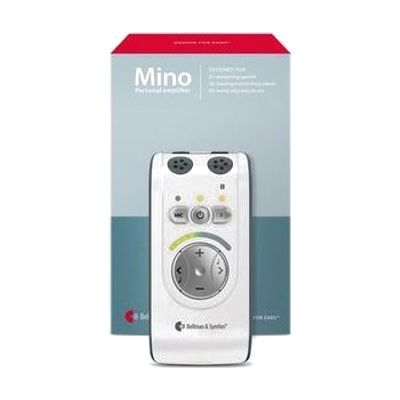
Mino Personal Amplifier
Price is what the vendor listed when last checked. Confirm it with the vendor before buying.
Last verified September 16, 2026 · classified April 26, 2026
What it is
Summary
AI-generated from vendor-published content · April 26, 2026
The Mino is a pocket-sized personal sound amplifier that boosts incoming audio — voices in conversation, TV dialogue, or speakers in a group setting — through an earbud or headphones you wear. It's designed for someone who struggles to follow speech in everyday situations but isn't using (or doesn't yet have) hearing aids, or needs supplemental amplification in specific settings like lectures or noisy restaurants. You get the amplifier unit itself with switchable directional and omnidirectional microphones, and it connects directly to standard earbuds, headphones, or hearing aids via built-in Telecoil — no additional hardware required. This is a personal sound amplification product (PSAP), not a medical hearing aid, so it won't be covered by insurance and isn't a substitute for a professional hearing evaluation if you have significant hearing loss.
Quick Facts Catalog facts · auto-generated
- AT Act lending
- Out of pocket
- Vocational rehab
What Setup Looks Like
- Out of the box
- Insert provided earbud or connect your own headphones to the audio jack.
- Point the microphone toward the sound source and press the power button.
- Use the tactile buttons to switch between directional and omnidirectional modes depending on your environment.
Getting it
Try Before You Buy
Devices like this are often available to borrow through your state's AT Act program — typically free or low-cost — so you can try it before buying or pursuing funding.
Where to Get It
This is the vendor WhatCanHelp tracks for this product — it may also be available from other retailers or a local supplier, and prices vary.
Some links may be affiliate links — WhatCanHelp may earn a small commission from purchases at no extra cost to you. More on affiliates →
As an Amazon Associate we earn from qualifying purchases.
How to Fund This
Equipment like this is often pursued through official state programs. These are common starting points — each program decides its own eligibility and what it covers, so the first step is always a phone call.
Compare & explore
Sources & fine print
Vendor facts (name, price, platforms, vendor link) sourced from Bellman & Symfon — view on vendor site; last verified September 16, 2026.
Classification & description AI-generated from vendor-published content on April 26, 2026 · confidence: high. Vendor specs may lag; verify before relying on details in a clinical or funding artifact.