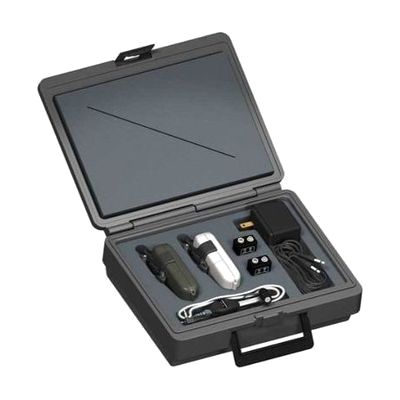
Comtek Communications Digital Auditory Wireless Trainer COM-AT216-3P
Price is what the vendor listed when last checked. Confirm it with the vendor before buying.
Last verified September 16, 2026 · classified April 26, 2026
What it is
Summary
AI-generated from vendor-published content · April 26, 2026
This is a classroom FM assistive listening system that wirelessly transmits a teacher's voice directly to a student's hearing aids or personal receiver, bypassing background noise and distance. It's designed for students with hearing loss who struggle to follow a speaker in a noisy classroom — the 'Smart Mic' feature automatically shifts between prioritizing the teacher's voice when speaking and picking up classroom peers when the teacher pauses. The kit includes a transmitter microphone for the teacher and a personal receiver the student wears, compatible with t-coil hearing aids, cochlear implants, or standard headphones via a neckloop. Note that at nearly $1,900 this is a significant investment, and proper channel setup and fitting should involve an audiologist to ensure compatibility with the student's specific hearing aids.
Quick Facts Catalog facts · auto-generated
- AT Act lending
- Insurance
- Medicaid waiver
- Out of pocket
- School district
- Vocational rehab
What Setup Looks Like
- Out of the box
Attach neckloop to receiver and wear around neck to activate t-coil coupling with hearing aids — basic signal reception is functional once paired. - With a guide
- Pair the M-216 transmitter microphone to the PR-216 receiver on the correct FM frequency channel.
- Select neckloop vs. headphone output mode based on whether the student uses hearing aids.
- Test Smart Mic prioritization in a realistic classroom environment to confirm voice/ambient switching works as expected. Allow 30–60 minutes total. See manufacturer support resources for detailed instructions.
- With professional help
- An audiologist confirms the FM system frequency is compatible with the student's hearing aids or cochlear implant processor and sets appropriate coupling mode (t-coil, direct audio input, or headphone).
- An educational audiologist or AT specialist may conduct a classroom listening check to verify signal-to-noise improvement at the student's seat. Expect 1–2 sessions.
Getting it
Try Before You Buy
Devices like this are often available to borrow through your state's AT Act program — typically free or low-cost — so you can try it before buying or pursuing funding.
Where to Get It
This is the vendor WhatCanHelp tracks for this product — it may also be available from other retailers or a local supplier, and prices vary.
Some links may be affiliate links — WhatCanHelp may earn a small commission from purchases at no extra cost to you. More on affiliates →
As an Amazon Associate we earn from qualifying purchases.
How to Fund This
Equipment like this is often pursued through official state programs. These are common starting points — each program decides its own eligibility and what it covers, so the first step is always a phone call.
Compare & explore
Sources & fine print
Vendor facts (name, price, platforms, vendor link) sourced from Comtek Communications — view on vendor site; last verified September 16, 2026.
Classification & description AI-generated from vendor-published content on April 26, 2026 · confidence: high. Vendor specs may lag; verify before relying on details in a clinical or funding artifact.