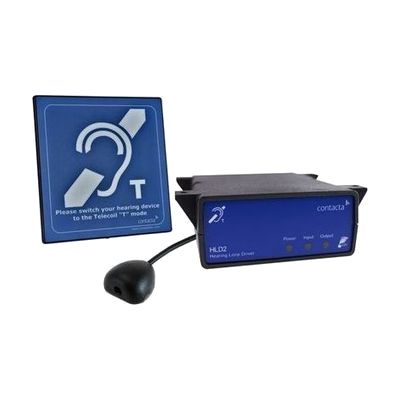
Contacta HLD2 Over-the-Counter Hearing Loop Amplifier
by Contacta
$500.00 ▲ $84.00 (20%)
Price is what the vendor listed when last checked. Confirm it with the vendor before buying.
Last verified September 16, 2026 · classified April 26, 2026
What it is
Summary
AI-generated from vendor-published content · April 26, 2026
The Contacta HLD2 is a hearing loop amplifier system designed for face-to-face service counter settings — think pharmacy windows, bank tellers, reception desks, or ticket booths. It works by generating an electromagnetic signal through a loop aerial installed at the counter, which is picked up directly and silently by a hearing aid or cochlear implant set to its telecoil (T-coil) mode, cutting out background noise between staff and customer. The kit ships with everything needed for a basic installation: the amplifier unit, a power supply, an under-counter loop aerial, and an M70 microphone for the staff side. The main thing to know before buying is that this is an installation project, not a plug-and-play device — the loop aerial needs to be routed and positioned correctly to perform well, and staff need to understand how to use the microphone, so a professional with hearing loop installation experience is strongly recommended to get compliant, reliable results.
Quick Facts Catalog facts · auto-generated
- Out of pocket
What Setup Looks Like
- With a guide
- Mount the HLD2 amplifier unit in an accessible location on the staff side of the counter.
- Route and install the IL-AE99 under-counter loop aerial flat beneath the counter surface according to the manufacturer's layout guide.
- Connect the M70 microphone, loop aerial, and power supply to the HLD2 unit.
- Test the loop signal strength with a field-strength meter or hearing aid in T-coil mode before going live — allow 1–2 hours for full installation and testing. See manufacturer support resources for detailed instructions.
- With professional help
- An audio engineer or hearing loop installer should verify installation complies with IEC 60118-4 (the international hearing loop performance standard).
- Expect a site visit of 2–4 hours for professional installation and loop field verification at a service counter.
Getting it
Many states lend devices like this for free trial periods — find your state's AT lending program.
Where to Get It
This is the vendor WhatCanHelp tracks for this product — it may also be available from other retailers or a local supplier, and prices vary.
Some links may be affiliate links — WhatCanHelp may earn a small commission from purchases at no extra cost to you. More on affiliates →
As an Amazon Associate we earn from qualifying purchases.
How to Fund This
Equipment like this is often pursued through official state programs. These are common starting points — each program decides its own eligibility and what it covers, so the first step is always a phone call.
Compare & explore
Sources & fine print
Vendor facts (name, price, platforms, vendor link) sourced from Contacta — view on vendor site; last verified September 16, 2026.
Classification & description AI-generated from vendor-published content on April 26, 2026 · confidence: high. Vendor specs may lag; verify before relying on details in a clinical or funding artifact.