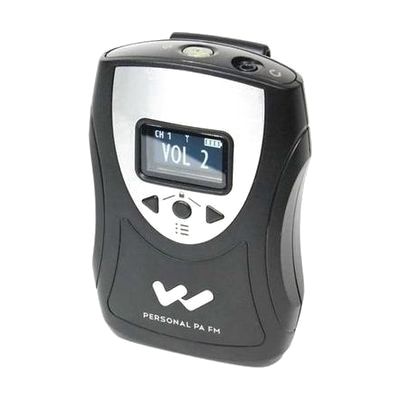
Williams Sound PPA R38 FM Receiver with OLED Screen
Last verified July 28, 2026 · classified April 26, 2026
What it is
Summary
AI-generated from vendor-published content · April 26, 2026
The PPA R38 is a handheld FM receiver that picks up audio transmitted over the 72–76 MHz assistive listening frequency band and delivers it directly to the user's earphones or headphones. It's designed for people with hearing loss who need to hear clearly in noisy or large spaces — classrooms, houses of worship, theaters, or meeting rooms — where a Williams Sound FM transmitter system is already installed. The OLED screen lets users see and adjust channel and volume settings without guessing, which is a meaningful upgrade over receivers with minimal feedback. This is only the receiver unit: you'll need a compatible Williams Sound FM transmitter (and a room-loop or microphone setup) to have a working system, plus your own earphones — none are included.
Quick Facts Catalog facts · auto-generated
- AT Act lending
- Insurance
- Medicaid waiver
- Out of pocket
- School district
- Vocational rehab
What Setup Looks Like
- Out of the box
Insert batteries or charge the receiver, then power it on to confirm it turns on and displays the OLED screen. - With a guide
- Match the receiver channel to the FM transmitter frequency already installed in the venue — use the OLED screen to navigate to the correct channel.
- Plug in compatible earphones or headphones to the stereo or mono jack and confirm audio is received clearly.
- Adjust volume and squelch settings as needed — typical first-time setup takes 5–10 minutes per user once the transmitter is already installed.
- With professional help
- An audiologist or hearing loop/FM system installer should configure and place the transmitter side of the system to ensure adequate signal coverage for the space.
- An ATP or hearing specialist can recommend appropriate earphone/hearing aid coupling accessories (neck loops, direct audio input cables) for users with behind-the-ear hearing aids.
- See manufacturer support resources for detailed instructions.
Getting it
Try Before You Buy
Devices like this are often available to borrow through your state's AT Act program — typically free or low-cost — so you can try it before buying or pursuing funding.
Where to Get It
This is the vendor WhatCanHelp tracks for this product — it may also be available from other retailers or a local supplier, and prices vary.
Some links may be affiliate links — WhatCanHelp may earn a small commission from purchases at no extra cost to you. More on affiliates →
As an Amazon Associate we earn from qualifying purchases.
How to Fund This
Equipment like this is often pursued through official state programs. These are common starting points — each program decides its own eligibility and what it covers, so the first step is always a phone call.
Compare & explore
Sources & fine print
Vendor facts (name, price, platforms, vendor link) sourced from Williams Sound — view on vendor site; last verified July 28, 2026.
Classification & description AI-generated from vendor-published content on April 26, 2026 · confidence: high. Vendor specs may lag; verify before relying on details in a clinical or funding artifact.