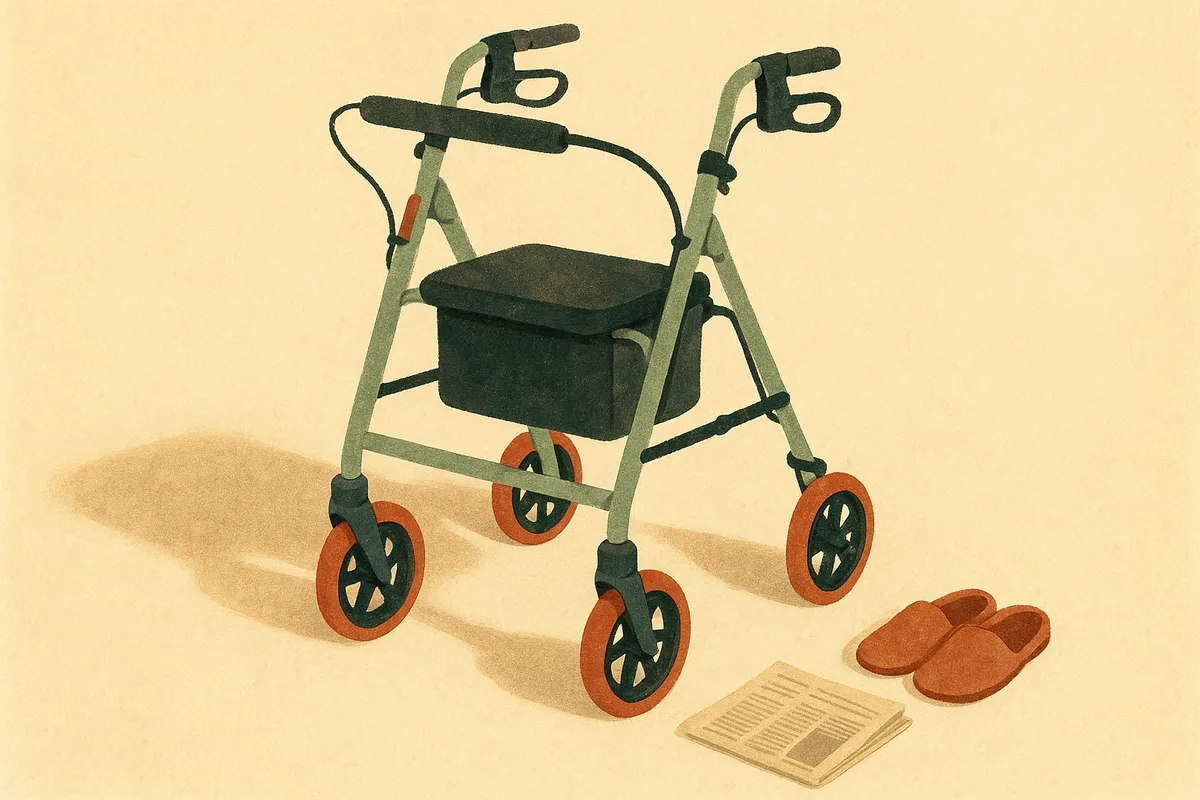
This week's mobility updates focus on specific physical moments — standing up from a couch, stepping into a car, carrying a cup of coffee across the room, crossing a raised threshold. These aren't flashy gadgets. They're the tools that make a dozen small moments in a day less exhausting, less risky, and less dependent on someone else being nearby.
Here's what's new and updated.
Walkers, Rollators, and the Accessories That Make Them Actually Useful
A walker on its own gets you moving. The right accessories can turn it into something that genuinely fits your life. Several updated products stand out here:
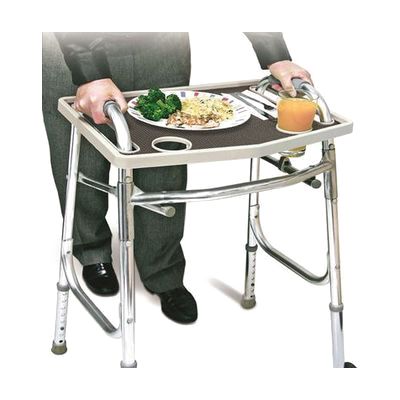 Walker Tray with Non-Slip Mat ($24.95) — Clips onto a standard walker's crossbar and provides a flat surface for carrying food, drinks, or a book. No more choosing between holding your coffee and holding your walker. Self serve — just clip it on.
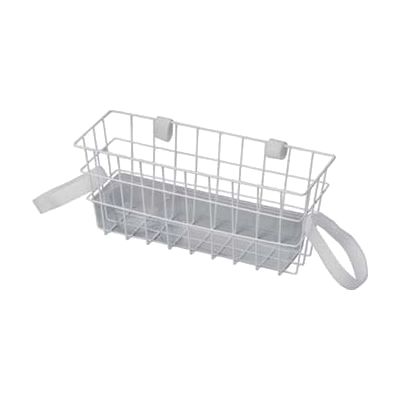 Walker Basket with Plastic Insert ($22.95) — A wire basket that mounts to the front of your walker for carrying everyday items. The plastic insert keeps small things from slipping through. Also self serve.
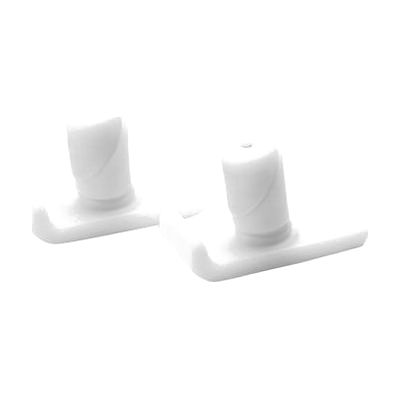 Walker Ski Glides ($17.95) — These replace the rubber tips on the back legs of a standard walker so it slides instead of needing to be lifted with every step. A small swap that can dramatically reduce fatigue. Self serve.
Many of these walker accessories come in under $25. For more affordable AT options, the guide to assistive technology under $100 that actually makes a difference covers a wider range of budget-friendly tools worth knowing about.
For the walkers themselves, several updated options are available depending on your needs:
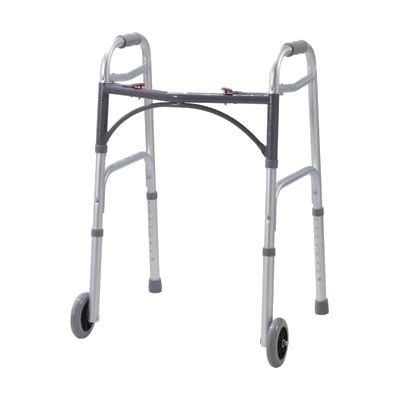 The Deluxe Folding Walker with Wheels ($59.95) is lightweight aluminum with front wheels and a two-button fold — good for situations where collapsing it for a car trunk or tight space matters. Professional recommended, since getting the right walker height and type makes a real difference.
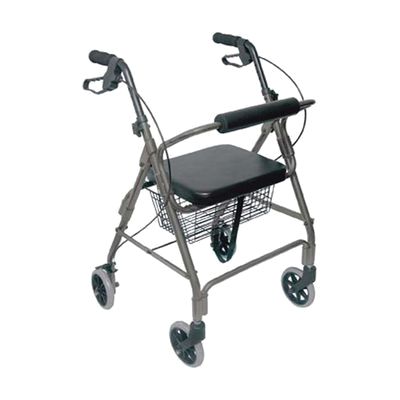 The Lightweight Aluminum Rollator ($191.95) adds a seat, backrest, storage basket, and hand brakes — designed for people who can walk but need the option to sit and rest. Guided setup.
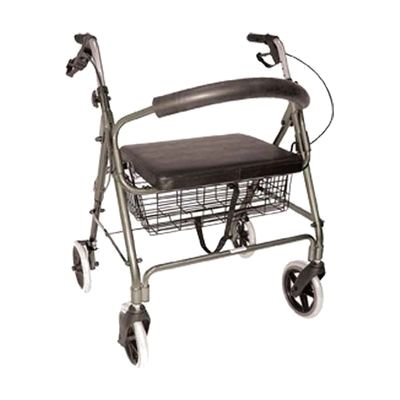 The Extra Wide Heavy Duty Rollator ($275) is built for bariatric use: 29.5 inches wide, rated to 375 pounds. If standard rollators feel cramped or flimsy, this one is worth considering. Guided setup.
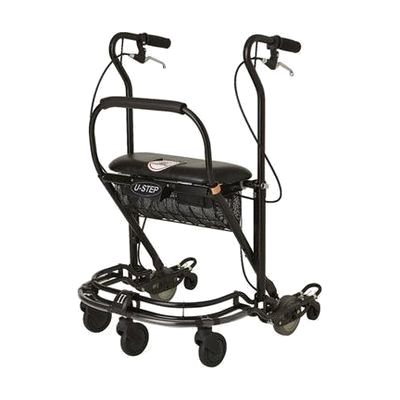 The U-Step 2 Walker with Seat and Basket ($539.95) is a specialized option with a U-shaped frame that wraps around the user on three sides. It's specifically designed for people with Parkinson's or conditions that affect balance and gait. Professional recommended — a therapist's input on fit and use is worthwhile here.
Standing Up, Sitting Down, Getting In and Out
Transfers are among the most physically demanding — and highest-risk — moments in daily life. These updated products address them directly:
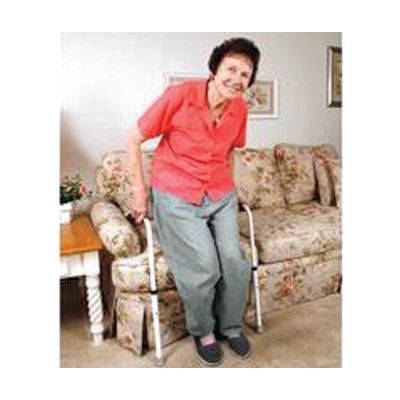 SafetySure StandEase ($64.95) — A freestanding grab-rail frame that hooks over the front of a sofa or armless chair, giving you padded handles to push off when standing or lowering yourself down. No installation required. Self serve.
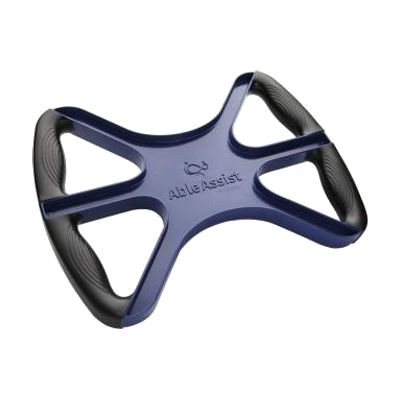 Liberty Lift Assist ($19.76) — A low-tech tool that gives a caregiver mechanical leverage to help lift someone from a chair, couch, or the floor. Useful when strength alone isn't quite enough. Guided setup.
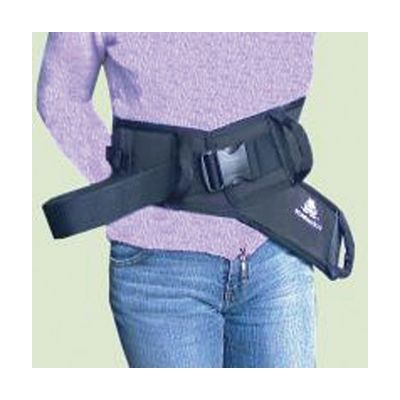 SafetySure Transfer Belt (Standard Large) ($43.95) — A padded belt that wraps around a person's waist so a caregiver has a secure grip during transfers — bed to wheelchair, sitting to standing. Professional recommended, because safe transfer technique matters as much as the belt itself.
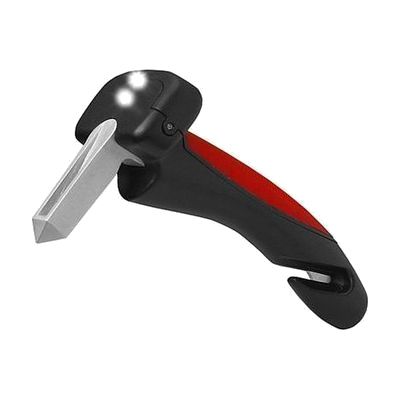 Car Cane ($19.95) — A portable handle that wedges into your car door latch to create a stable grip point for getting in and out of a vehicle. Fits in the glove compartment. Self serve.
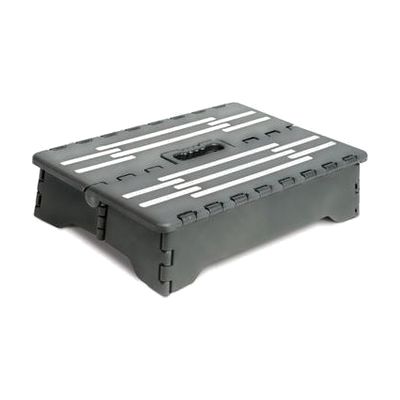 Folding Half Step Stool ($19.95) — Adds about 4 inches of height to make stepping into a vehicle, crossing a raised entry, or reaching something slightly elevated much easier. Folds flat for storage. Self serve.
Canes for Different Needs
Not all canes solve the same problem. This batch of updates reflects that range:
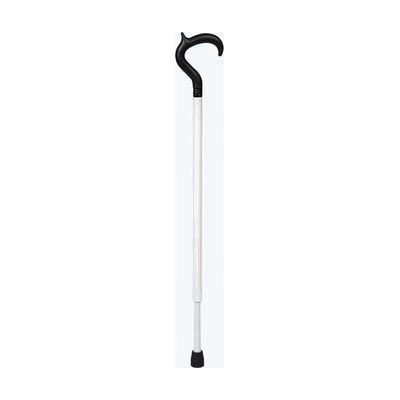 The AmbuTech White Support Cane (Modern Handle) ($28.01) is an adjustable white cane for people with low vision or blindness — it follows the internationally recognized white-and-red color convention that signals to others that the user has a visual impairment. Guided setup.
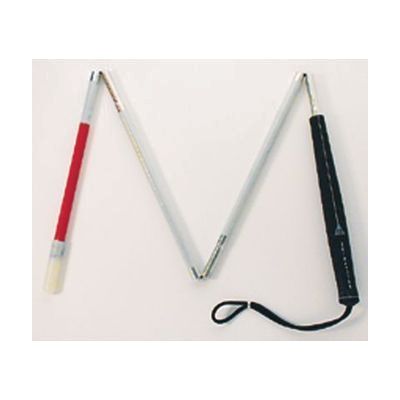 The WCIB Aluminum Cane (4 Sections) ($17.96) is a folding white cane that collapses for easy travel and storage. Designed for people who are blind or have significant vision loss. Professional recommended — proper cane length and technique training make a meaningful difference.
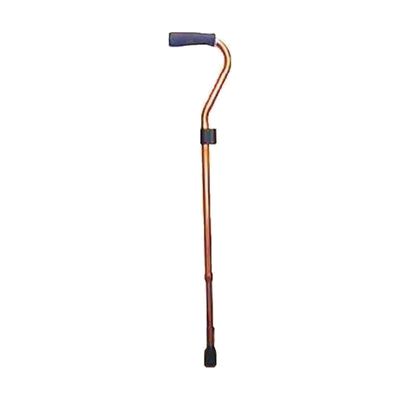 The U-STEP Laser Cane ($239.95) is a standard walking cane with a built-in laser that projects a bright red line across the floor. That visual cue is specifically designed to help people with Parkinson's break through freezing episodes. Professional recommended.
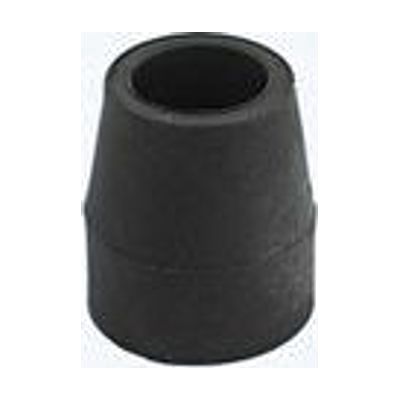 For anyone who already owns an Ambutech VIP Folding Support Cane, the replacement rubber tip ($4.40) is available — a small purchase that keeps your cane safe and functional when the original wears down. Self serve.
A Note on Complexity
Each product above is tagged with a complexity tier — self serve, guided setup, or professional recommended. Here's what those mean in practice:
- Self serve — Buy it, unbox it, and start using it without special help.
- Guided setup — Some benefit from having someone walk through setup or adjustment, but it's not complicated.
- Professional recommended — A therapist, rehab specialist, or AT professional should ideally help with selection and fit. The wrong walker size or incorrect cane technique can create new problems.
Explore all of these products — and hundreds more — on WhatCanHelp.com. Filter by need, price, or complexity to find what fits your situation.