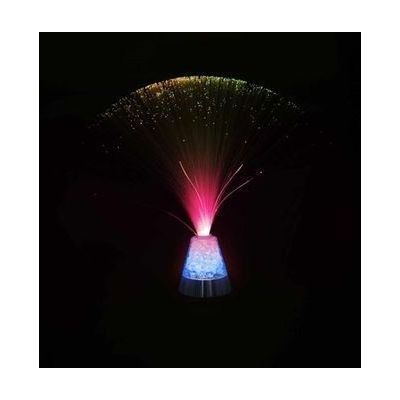
Fiber Optic Sensory Light
Price is what the vendor listed when last checked. Confirm it with the vendor before buying.
Last verified June 26, 2026 · classified April 26, 2026
What it is
Summary
AI-generated from vendor-published content · April 26, 2026
This is a color-cycling fiber optic light display — a small base unit with crystal elements that glow and shift through multiple colors, with long fiber optic strands that spray out and carry the light to their tips in a shimmering effect. It's designed for people who benefit from visual stimulation and calming sensory input, particularly children or adults with autism, sensory processing differences, or limited motor abilities who are working on cause-and-effect skills and grasping. The device is switch-activated, so it plugs into an adaptive switch (sold separately) and turns on or off when the switch is pressed — making it a useful tool in early cause-and-effect learning or for anyone who cannot operate a standard button easily. At under $50 it's an affordable sensory tool, but note that the switch itself is not included, and the fiber optic strands can be fragile with rough handling.
Quick Facts Catalog facts · auto-generated
- AT Act lending
- Medicaid waiver
- Out of pocket
- School district
What Setup Looks Like
- Out of the box
Insert 3 AAA batteries into the base unit — the light will cycle through colors automatically when activated. - With a guide
- Connect a compatible adaptive switch (sold separately) to the switch jack on the base.
- Position the device at a comfortable viewing distance for the user — typically 1-3 feet.
- Test switch activation to confirm cause-and-effect response is working as intended. Allow 15-30 minutes for full setup and placement.
- With professional help
- An occupational therapist (OT) or special education teacher can integrate this into a cause-and-effect or grasp-development program, selecting the appropriate switch type and placement for the user.
- Expect 1-2 sessions to establish a consistent activation routine. See manufacturer support resources for detailed instructions.
Getting it
Try Before You Buy
Devices like this are often available to borrow through your state's AT Act program — typically free or low-cost — so you can try it before buying or pursuing funding.
Where to Get It
This is the vendor WhatCanHelp tracks for this product — it may also be available from other retailers or a local supplier, and prices vary.
Some links may be affiliate links — WhatCanHelp may earn a small commission from purchases at no extra cost to you. More on affiliates →
As an Amazon Associate we earn from qualifying purchases.
How to Fund This
Equipment like this is often pursued through official state programs. These are common starting points — each program decides its own eligibility and what it covers, so the first step is always a phone call.
Compare & explore
Sources & fine print
Vendor facts (name, price, platforms, vendor link) sourced from Enabling Devices — view on vendor site; last verified June 26, 2026.
Classification & description AI-generated from vendor-published content on April 26, 2026 · confidence: high. Vendor specs may lag; verify before relying on details in a clinical or funding artifact.