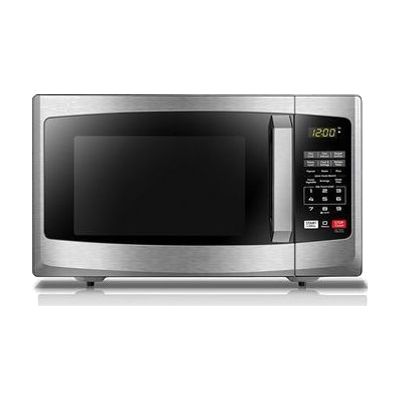
Tactile Touch Pad Microwave- Stainless Steel
by MaxiAids
Last verified June 17, 2026 · classified April 26, 2026
What it is
Summary
AI-generated from vendor-published content · April 26, 2026
This is a standard 900-watt countertop microwave that has been adapted with raised tactile labels — braille-like bumps and letters — printed or affixed next to each button on the control panel, allowing someone who can't read the visual display to identify functions by touch. It's designed for blind or low vision users who need to independently operate a microwave without sighted assistance. The package is a complete, ready-to-use appliance — plug it in and start cooking. Tactile labels on appliances can wear over time with repeated touching, so long-term durability of the tactile markings is worth monitoring.
Quick Facts Catalog facts · auto-generated
- AT Act lending
- Medicaid waiver
- Out of pocket
What Setup Looks Like
- Out of the box
- Place the microwave on a stable countertop and plug into a standard 120V outlet.
- Explore the tactile-labeled control panel by touch to learn button positions before first use.
Getting it
Try Before You Buy
Devices like this are often available to borrow through your state's AT Act program — typically free or low-cost — so you can try it before buying or pursuing funding.
Where to Get It
Some links may be affiliate links — WhatCanHelp may earn a small commission from purchases at no extra cost to you. More on affiliates →
As an Amazon Associate we earn from qualifying purchases.
How to Fund This
Equipment like this is often pursued through official state programs. These are common starting points — each program decides its own eligibility and what it covers, so the first step is always a phone call.
Compare & explore
Sources & fine print
Vendor facts (name, price, platforms, vendor link) sourced from MaxiAids — view on vendor site; last verified June 17, 2026.
Classification & description AI-generated from vendor-published content on April 26, 2026 · confidence: high. Vendor specs may lag; verify before relying on details in a clinical or funding artifact.