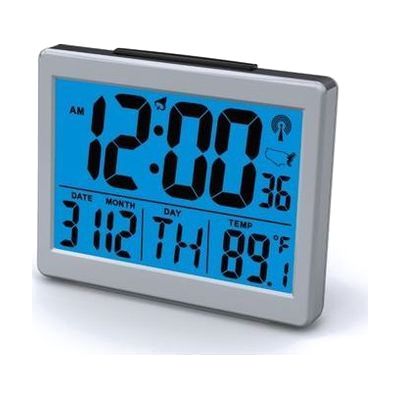
Atomic Desk-Bedroom Alarm Clock with 1.5-inch LCD Numbers
by Sonnet
Last verified June 17, 2026 · classified April 26, 2026
What it is
Summary
AI-generated from vendor-published content · April 26, 2026
This compact desk clock displays the time in 1.5-inch LCD digits, large enough to read at a glance without leaning in or squinting. It's a practical option for someone with mild to moderate low vision who wants a bedside or desk clock they can actually read — particularly at night, when the blue backlight activates on demand. The clock syncs automatically with the atomic time signal broadcast from NIST in Colorado, so the time is always accurate without any manual setting. It also shows the date, day of the week, and room temperature, all in one small unit. The backlight is on-demand rather than always-on, so it won't light up automatically when you wake in the night — you'll need to press a button.
Quick Facts Catalog facts · auto-generated
- AT Act lending
- Out of pocket
What Setup Looks Like
- Out of the box
- Insert 2 AA batteries (not included) — the clock will automatically sync with the atomic time signal within a few minutes.
- Place on a desk or nightstand; set the alarm using the buttons on the back or bottom of the unit.
Getting it
Try Before You Buy
Devices like this are often available to borrow through your state's AT Act program — typically free or low-cost — so you can try it before buying or pursuing funding.
Where to Get It
Some links may be affiliate links — WhatCanHelp may earn a small commission from purchases at no extra cost to you. More on affiliates →
As an Amazon Associate we earn from qualifying purchases.
Wondering how equipment like this gets paid for? See the official funding programs in your state.
Compare & explore
Sources & fine print
Vendor facts (name, price, platforms, vendor link) sourced from Sonnet — view on vendor site; last verified June 17, 2026.
Classification & description AI-generated from vendor-published content on April 26, 2026 · confidence: high. Vendor specs may lag; verify before relying on details in a clinical or funding artifact.