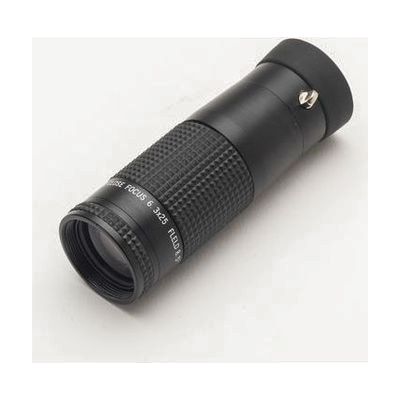
Walters 6.3x25 Monocular
by Walters
Price is what the vendor listed when last checked. Confirm it with the vendor before buying.
Last verified September 19, 2026 · classified April 26, 2026
What it is
Summary
AI-generated from vendor-published content · April 26, 2026
This is a compact, single-eye telescope (monocular) designed to help people with low vision see distant objects more clearly — things like bus numbers, street signs, classroom whiteboards, or TV screens. It's well-suited for someone who has enough remaining vision to benefit from magnification but struggles to see at distance, and who wants something small enough to carry in a pocket or purse. You get the monocular itself, a protective case, and a neck strap — everything needed to start using it right away. Handheld monoculars require a steady hand to get a stable image, and some users find higher magnification harder to use without practice; a 6.3x or 7x monocular has a narrower field of view than lower-power models, so it takes a little getting used to.
Quick Facts Catalog facts · auto-generated
- AT Act lending
- Out of pocket
- Vocational rehab
What Setup Looks Like
- Out of the box
- Remove monocular from case and hang neck strap if desired.
- Hold to eye and rotate the focus ring until the target image sharpens — works immediately, no batteries or charging required.
- With professional help
- A low vision optometrist or certified low vision therapist (CLVT) can assess whether this power level (6.3x–7x) matches your remaining vision and intended tasks.
- A CLVT can also teach scanning and tracking techniques that significantly improve practical usability — expect 1–2 sessions.
Getting it
Try Before You Buy
Devices like this are often available to borrow through your state's AT Act program — typically free or low-cost — so you can try it before buying or pursuing funding.
Where to Get It
This is the vendor WhatCanHelp tracks for this product — it may also be available from other retailers or a local supplier, and prices vary.
Some links may be affiliate links — WhatCanHelp may earn a small commission from purchases at no extra cost to you. More on affiliates →
As an Amazon Associate we earn from qualifying purchases.
How to Fund This
Equipment like this is often pursued through official state programs. These are common starting points — each program decides its own eligibility and what it covers, so the first step is always a phone call.
Compare & explore
Sources & fine print
Vendor facts (name, price, platforms, vendor link) sourced from Walters — view on vendor site; last verified September 19, 2026.
Classification & description AI-generated from vendor-published content on April 26, 2026 · confidence: high. Vendor specs may lag; verify before relying on details in a clinical or funding artifact.