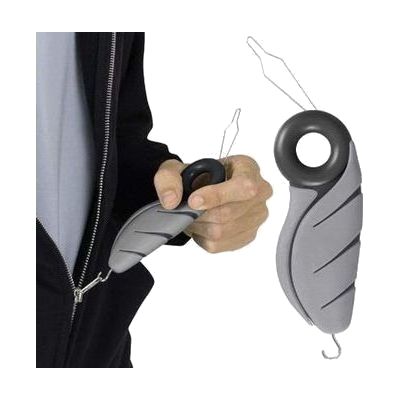
Button Hook Dressing Aid from Vive Health
by Vive Health
Price is what the vendor listed when last checked. Confirm it with the vendor before buying.
Last verified September 16, 2026 · classified April 26, 2026
What it is
Summary
AI-generated from vendor-published content · April 26, 2026
A button hook is a small hand tool with a wire loop at one end that slides through a buttonhole, catches the button, and pulls it back through — making it possible to fasten buttons with one hand or with limited finger strength. It's designed for people who find standard buttons difficult or impossible to manage due to conditions like arthritis, stroke, or reduced hand dexterity. This version from Vive Health features an ergonomic handle with a finger loop to stabilize the tool without requiring a tight grip. It's a standalone, low-tech solution — no batteries, apps, or accessories needed — though it does take a few minutes of practice to get the technique down.
Quick Facts Catalog facts · auto-generated
- AT Act lending
- Medicaid waiver
- Out of pocket
- Vocational rehab
What Setup Looks Like
- Out of the box
- Insert the wire loop through the buttonhole from the front of the garment.
- Hook the loop around the button and pull it back through the buttonhole.
- Practice the motion a few times to build consistency — most users are comfortable within a session or two.
Getting it
Try Before You Buy
Devices like this are often available to borrow through your state's AT Act program — typically free or low-cost — so you can try it before buying or pursuing funding.
Where to Get It
This is the vendor WhatCanHelp tracks for this product — it may also be available from other retailers or a local supplier, and prices vary.
Some links may be affiliate links — WhatCanHelp may earn a small commission from purchases at no extra cost to you. More on affiliates →
As an Amazon Associate we earn from qualifying purchases.
How to Fund This
Equipment like this is often pursued through official state programs. These are common starting points — each program decides its own eligibility and what it covers, so the first step is always a phone call.
Compare & explore
Sources & fine print
Vendor facts (name, price, platforms, vendor link) sourced from Vive Health — view on vendor site; last verified September 16, 2026.
Classification & description AI-generated from vendor-published content on April 26, 2026 · confidence: high. Vendor specs may lag; verify before relying on details in a clinical or funding artifact.