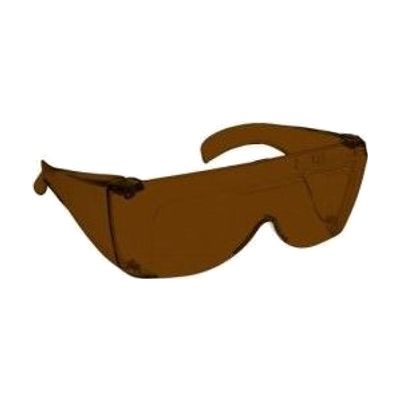
NoIR Fit Over 6% Dark Amber, Large
by NoIR Medical
Last verified June 18, 2026 · classified April 26, 2026
What it is
Summary
AI-generated from vendor-published content · April 26, 2026
These are specialized amber-tinted fit-over sunglasses designed for people with light sensitivity and low vision conditions — the dark amber filter (6% light transmission) enhances contrast, reduces glare, and blocks ultraviolet and infrared light, making details easier to distinguish in bright environments. They're particularly suited for someone with Retinitis Pigmentosa, macular degeneration, or other conditions that cause photophobia or contrast loss. The fit-over design means they can be worn directly over existing prescription glasses, so there's no need for a separate prescription tinted lens. At 6% light transmission, these are quite dark and are best for bright outdoor environments — they may reduce visibility too much for indoor or low-light use.
Quick Facts Catalog facts · auto-generated
- AT Act lending
- Medicaid waiver
- Out of pocket
What Setup Looks Like
- Out of the box
- Slide the fit-over frame over your existing prescription glasses, or wear alone as sunglasses.
- Adjust the curved temple pieces for a secure, non-slip fit — no tools or pairing needed.
Getting it
Try Before You Buy
Devices like this are often available to borrow through your state's AT Act program — typically free or low-cost — so you can try it before buying or pursuing funding.
Where to Get It
Some links may be affiliate links — WhatCanHelp may earn a small commission from purchases at no extra cost to you. More on affiliates →
As an Amazon Associate we earn from qualifying purchases.
How to Fund This
Equipment like this is often pursued through official state programs. These are common starting points — each program decides its own eligibility and what it covers, so the first step is always a phone call.
Compare & explore
Sources & fine print
Vendor facts (name, price, platforms, vendor link) sourced from NoIR Medical — view on vendor site; last verified June 18, 2026.
Classification & description AI-generated from vendor-published content on April 26, 2026 · confidence: high. Vendor specs may lag; verify before relying on details in a clinical or funding artifact.