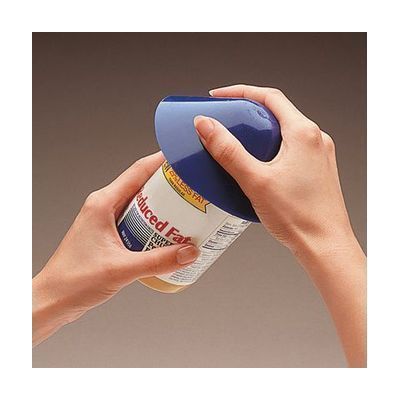
Dycem Non-slip Lid Openers
Price is what the vendor listed when last checked. Confirm it with the vendor before buying.
Last verified September 16, 2026 · classified April 26, 2026
What it is
Summary
AI-generated from vendor-published content · April 26, 2026
These are flexible, non-slip grip pads made from Dycem material — a rubber-like polymer that dramatically increases friction between your hand and a lid. They're designed for people who have difficulty generating enough grip force to open jars or bottles, whether due to arthritis, weakness, limited hand function, or reduced dexterity. Two sizes are available: one for standard jars up to 4 inches in diameter, and a smaller version for medicine bottles and childproof caps. This is a complete, ready-to-use solution — no setup required — though it won't help users who lack the wrist rotation needed to twist a lid, only those who struggle with grip force or slippage.
Quick Facts Catalog facts · auto-generated
- AT Act lending
- Medicaid waiver
- Out of pocket
- Vocational rehab
What Setup Looks Like
- Out of the box
- Place the Dycem opener over the jar or bottle lid.
- Grip through the pad and twist — the non-slip surface does the work.
Getting it
Try Before You Buy
Devices like this are often available to borrow through your state's AT Act program — typically free or low-cost — so you can try it before buying or pursuing funding.
Where to Get It
This is the vendor WhatCanHelp tracks for this product — it may also be available from other retailers or a local supplier, and prices vary.
Some links may be affiliate links — WhatCanHelp may earn a small commission from purchases at no extra cost to you. More on affiliates →
As an Amazon Associate we earn from qualifying purchases.
How to Fund This
Equipment like this is often pursued through official state programs. These are common starting points — each program decides its own eligibility and what it covers, so the first step is always a phone call.
Compare & explore
Sources & fine print
Vendor facts (name, price, platforms, vendor link) sourced from North Coast Medical — view on vendor site; last verified September 16, 2026.
Classification & description AI-generated from vendor-published content on April 26, 2026 · confidence: high. Vendor specs may lag; verify before relying on details in a clinical or funding artifact.