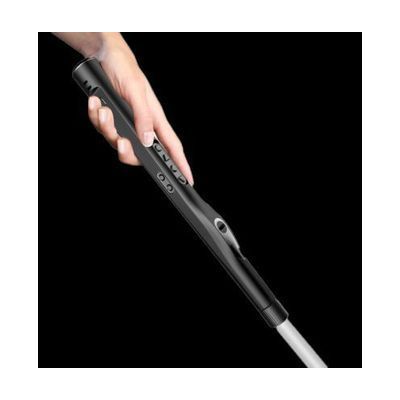
WeWALK Smart Cane V2
by WeWALK
Price is what the vendor listed when last checked. Confirm it with the vendor before buying.
Last verified September 19, 2026 · classified April 26, 2026
What it is
Summary
AI-generated from vendor-published content · April 26, 2026
The WeWALK Smart Cane V2 combines a standard graphite white cane with an ultrasonic sensor handle that detects obstacles above waist height — things like tree branches, truck mirrors, and hanging signs that a traditional cane tip never reaches. It's designed for blind and low-vision individuals who already have solid white cane skills and want to add a layer of environmental awareness and smartphone-integrated navigation without holding their phone. The handle pairs via Bluetooth to a free iOS/Android app that provides turn-by-turn navigation, public transit integration, and points-of-interest scanning, all controllable through tactile buttons on the cane itself. One important limitation: this is not a replacement for learning proper white cane technique — WeWALK is explicitly designed for people who are already trained in orientation and mobility, so it works best as an enhancement rather than a starting point.
Quick Facts Catalog facts · auto-generated
- AT Act lending
- Medicaid waiver
- Out of pocket
- Vocational rehab
What Setup Looks Like
- Out of the box
- Attach the WeWALK handle to the included Ambutech graphite cane — it connects at the top.
- Power on the handle and begin using the ultrasonic obstacle detection feature right away, no app required.
- With a guide
- Download the free WeWALK app (iOS or Android) and pair via Bluetooth.
- Configure detection range (30–70 inches) and navigation preferences through the app's preference menu.
- Practice using the handle's tactile buttons to control app navigation so the phone stays in your pocket — allow 30–60 minutes to get comfortable with button mapping. See manufacturer support resources for detailed instructions.
- With professional help
- An Orientation and Mobility Specialist (O&M Specialist) should assess whether the user has sufficient white cane proficiency before adding this device.
- An O&M session (1–3 sessions recommended) helps integrate the cane's audio and haptic feedback into safe travel routines, particularly in complex environments like transit stations.
Getting it
Try Before You Buy
Devices like this are often available to borrow through your state's AT Act program — typically free or low-cost — so you can try it before buying or pursuing funding.
Where to Get It
This is the vendor WhatCanHelp tracks for this product — it may also be available from other retailers or a local supplier, and prices vary.
Some links may be affiliate links — WhatCanHelp may earn a small commission from purchases at no extra cost to you. More on affiliates →
As an Amazon Associate we earn from qualifying purchases.
How to Fund This
Equipment like this is often pursued through official state programs. These are common starting points — each program decides its own eligibility and what it covers, so the first step is always a phone call.
Compare & explore
Sources & fine print
Vendor facts (name, price, platforms, vendor link) sourced from WeWALK — view on vendor site; last verified September 19, 2026.
Classification & description AI-generated from vendor-published content on April 26, 2026 · confidence: high. Vendor specs may lag; verify before relying on details in a clinical or funding artifact.