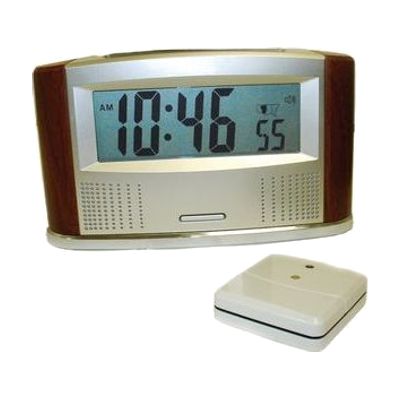
ILA Atomic Talking Clock & Outdoor Thermometer
Last verified June 19, 2026 · classified April 26, 2026
What it is
Summary
AI-generated from vendor-published content · April 26, 2026
This talking atomic clock announces the time, date, alarm information, and both indoor and outdoor temperatures in a clear spoken voice — no reading required. It's designed for people with vision loss or low vision who need to stay aware of time and conditions throughout the day, and also works well for anyone who benefits from audio feedback rather than squinting at a small display. The package includes the main clock unit and a wireless outdoor temperature sensor, so it's a complete setup out of the box. Batteries are not included for either unit — you'll need two AA and two AAA batteries before it will work.
Quick Facts Catalog facts · auto-generated
- AT Act lending
- Out of pocket
What Setup Looks Like
- Out of the box
- Install AA batteries in the clock and AAA batteries in the wireless sensor (not included).
- The atomic clock self-sets the time automatically by receiving a radio signal — no manual time-setting needed.
- Place the outdoor sensor within wireless range and press the voice button to hear the current time or temperature.
Getting it
Try Before You Buy
Devices like this are often available to borrow through your state's AT Act program — typically free or low-cost — so you can try it before buying or pursuing funding.
Where to Get It
Some links may be affiliate links — WhatCanHelp may earn a small commission from purchases at no extra cost to you. More on affiliates →
As an Amazon Associate we earn from qualifying purchases.
Wondering how equipment like this gets paid for? See the official funding programs in your state.
Compare & explore
Sources & fine print
Vendor facts (name, price, platforms, vendor link) sourced from Independent Living Aids — view on vendor site; last verified June 19, 2026.
Classification & description AI-generated from vendor-published content on April 26, 2026 · confidence: high. Vendor specs may lag; verify before relying on details in a clinical or funding artifact.