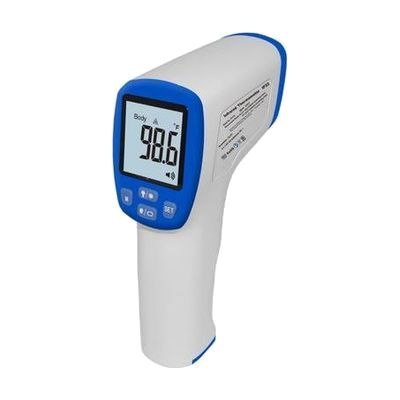
Talking Infrared Personal Thermometer
Last verified June 19, 2026 · classified April 26, 2026
What it is
Summary
AI-generated from vendor-published content · April 26, 2026
This is a no-touch forehead thermometer that speaks the temperature reading aloud in English or Spanish, making it usable without needing to read a small digital display. It's designed for someone with low vision or blindness who needs to monitor body temperature independently — the talking output means the reading is accessible without any additional aids or assistance. You get a complete, ready-to-use device that runs on standard AA batteries and stores up to 32 previous readings for reference. AA batteries aren't included, and the spoken audio can be toggled off, so make sure it's set to the talking mode when you first set it up.
Quick Facts Catalog facts · auto-generated
- AT Act lending
- Out of pocket
What Setup Looks Like
- Out of the box
- Insert 2 AA batteries (not included).
- Toggle the voice setting to the 'on' position.
- Select your preferred language (English or Spanish) and temperature unit (°F or °C).
- Hold the thermometer 2–4 inches from the forehead and press the button to take a reading — result is spoken aloud within seconds.
Getting it
Try Before You Buy
Devices like this are often available to borrow through your state's AT Act program — typically free or low-cost — so you can try it before buying or pursuing funding.
Where to Get It
Some links may be affiliate links — WhatCanHelp may earn a small commission from purchases at no extra cost to you. More on affiliates →
As an Amazon Associate we earn from qualifying purchases.
Wondering how equipment like this gets paid for? See the official funding programs in your state.
Compare & explore
Sources & fine print
Vendor facts (name, price, platforms, vendor link) sourced from Independent Living Aids — view on vendor site; last verified June 19, 2026.
Classification & description AI-generated from vendor-published content on April 26, 2026 · confidence: high. Vendor specs may lag; verify before relying on details in a clinical or funding artifact.