Pocket Money Brailler
Last verified June 19, 2026 · classified April 26, 2026
What it is
Summary
AI-generated from vendor-published content · April 26, 2026
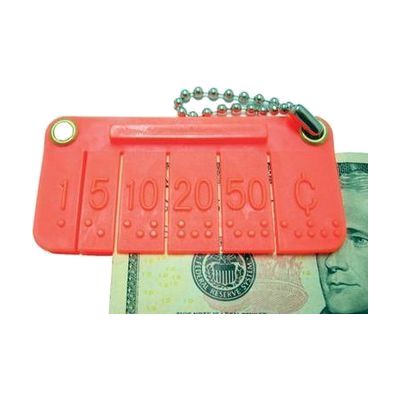
This small tool physically embosses a braille denomination code onto paper currency by pressing the bill between two textured plastic strips — no ink, no electronics, just a tactile impression that can be felt later by touch. It's designed for blind or low vision individuals who handle cash and need a reliable way to tell a $1 from a $20 without sighted assistance. You get a complete, self-contained solution in a 3-inch orange plastic device that clips to a keychain, so it's always available at the point of need. The embossed marks are made on the bill itself and may fade or flatten over time with normal wallet use, so bills may need to be re-marked periodically.
Quick Facts Catalog facts · auto-generated
- AT Act lending
- Out of pocket
What Setup Looks Like
- Out of the box
- Slide a bill between the two labeled braille strips corresponding to the correct denomination.
- Press the strips firmly together to emboss the braille code onto the bill.
- Feel the raised dots to confirm the mark — bill is now identifiable by touch.
Getting it
Try Before You Buy
Devices like this are often available to borrow through your state's AT Act program — typically free or low-cost — so you can try it before buying or pursuing funding.
Where to Get It
Some links may be affiliate links — WhatCanHelp may earn a small commission from purchases at no extra cost to you. More on affiliates →
As an Amazon Associate we earn from qualifying purchases.
Wondering how equipment like this gets paid for? See the official funding programs in your state.
Compare & explore
Sources & fine print
Vendor facts (name, price, platforms, vendor link) sourced from Independent Living Aids — view on vendor site; last verified June 19, 2026.
Classification & description AI-generated from vendor-published content on April 26, 2026 · confidence: high. Vendor specs may lag; verify before relying on details in a clinical or funding artifact.