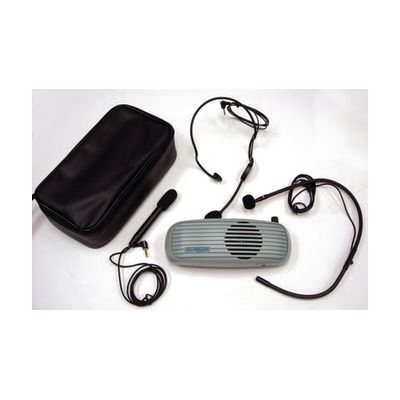
ChatterVox Voice Amplifier
by ChatterVox
$254.95 ▲ $39.19 (18%)
Price is what the vendor listed when last checked. Confirm it with the vendor before buying.
Last verified September 20, 2026 · classified April 26, 2026
What it is
Summary
AI-generated from vendor-published content · April 26, 2026
The ChatterVox is a wearable voice amplifier that boosts a speaker's natural voice by approximately 14 dB through a small belt-worn unit paired with a microphone. It's designed for teachers, tour guides, public speakers, or anyone whose voice fatigues quickly or doesn't carry well in group settings — including people with conditions like Parkinson's disease, laryngectomy, or other voice disorders that reduce vocal volume. The unit runs on rechargeable NiMH batteries (with a charger included) or standard AA batteries, and the whole system comes ready to use. This is an amplifier for soft or weak voices, not a speech-generating device — it requires the user to be able to produce at least some vocal sound, and the microphone and speaker are sold as a set, so replacement parts may need to come from the manufacturer directly.
Quick Facts Catalog facts · auto-generated
- AT Act lending
- Out of pocket
- Vocational rehab
What Setup Looks Like
- Out of the box
- Charge the batteries using the included charger before first use.
- Clip the amplifier unit to your belt or waist pouch, attach the microphone, and use the single control to power on and adjust volume.
- With professional help
A speech-language pathologist (SLP) can assess whether voice amplification is the right intervention versus other voice therapy approaches, particularly for users with progressive conditions like Parkinson's — typically one evaluation session.
Getting it
Try Before You Buy
Devices like this are often available to borrow through your state's AT Act program — typically free or low-cost — so you can try it before buying or pursuing funding.
Where to Get It
This is the vendor WhatCanHelp tracks for this product — it may also be available from other retailers or a local supplier, and prices vary.
Some links may be affiliate links — WhatCanHelp may earn a small commission from purchases at no extra cost to you. More on affiliates →
As an Amazon Associate we earn from qualifying purchases.
How to Fund This
Equipment like this is often pursued through official state programs. These are common starting points — each program decides its own eligibility and what it covers, so the first step is always a phone call.
Compare & explore
Sources & fine print
Vendor facts (name, price, platforms, vendor link) sourced from ChatterVox — view on vendor site; last verified September 20, 2026.
Classification & description AI-generated from vendor-published content on April 26, 2026 · confidence: high. Vendor specs may lag; verify before relying on details in a clinical or funding artifact.