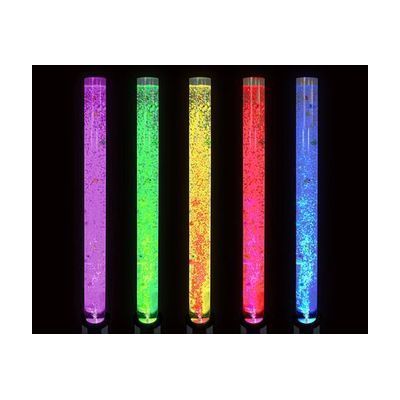
Sensa Large Bubble Tube
Price is what the vendor listed when last checked. Confirm it with the vendor before buying.
Last verified September 16, 2026 · classified May 9, 2026
What it is
Summary
AI-generated from vendor-published content · May 9, 2026
A floor-standing acrylic tube, roughly 6 feet tall, filled with water, colored fish, and rising bubbles illuminated by color-changing LED lights. It's designed for sensory rooms, therapy spaces, and de-escalation areas — the combination of slow movement, shifting color, and low ambient pump noise tends to have a regulating effect for people who are overwhelmed or dysregulated. The tube is self-contained and plugs into mains power, with an automatic 4-hour shutoff, so there's no complex programming involved. The base provides some stability, but a wall-mounting bracket is sold separately and genuinely recommended for safety given the height and weight — skipping it in a space with children or active users is a real risk.
Quick Facts Catalog facts · auto-generated
- AT Act lending
- Out of pocket
- School district
What Setup Looks Like
- Out of the box
Plug into mains power — lights and bubbles activate automatically. - With a guide
- Position tube in its base in a stable location away from high-traffic paths.
- Secure to wall using the separately purchased bubble tube bracket — follow mounting instructions, which require basic wall-fixing tools (approximately 30–60 minutes including wall prep).
- See manufacturer support resources for detailed instructions.
- With professional help
- An occupational therapist (OT) or sensory integration specialist can advise on optimal placement within a sensory room or de-escalation zone.
- If integrating into a formal sensory diet or therapy program, consult with an OT to define intended use and access protocols — typically one session.
Getting it
Try Before You Buy
Devices like this are often available to borrow through your state's AT Act program — typically free or low-cost — so you can try it before buying or pursuing funding.
Where to Get It
This is the vendor WhatCanHelp tracks for this product — it may also be available from other retailers or a local supplier, and prices vary.
Some links may be affiliate links — WhatCanHelp may earn a small commission from purchases at no extra cost to you. More on affiliates →
As an Amazon Associate we earn from qualifying purchases.
Wondering how equipment like this gets paid for? See the official funding programs in your state.
Compare & explore
Sources & fine print
Vendor facts (name, price, platforms, vendor link) sourced from Inclusive Technology — view on vendor site; last verified September 16, 2026.
Classification & description AI-generated from vendor-published content on May 9, 2026 · confidence: high. Vendor specs may lag; verify before relying on details in a clinical or funding artifact.