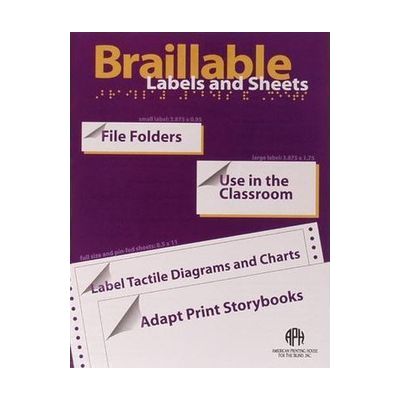
Braillable Labels and Sheets
by American Printing House for the Blind
Last verified June 15, 2026 · classified May 23, 2026
What it is
Summary
AI-generated from vendor-published content · May 23, 2026
Blank transparent adhesive labels designed to be run through a Braille embosser or written with a slate and stylus, then stuck onto everyday objects — food containers, file folders, appliances, anything that needs tactile identification. They're for blind or low-vision individuals who want to label their environment independently without relying on sighted assistance or printed text. This is a consumable supply, not a complete solution — you need a Braille embosser or slate and stylus to actually produce the Braille dots, and the labels themselves arrive blank. Pin-fed format means they're designed to feed through a pin-feed embosser rather than a standard sheet-fed printer, so confirm compatibility with your specific embosser before ordering.
Quick Facts Catalog facts · auto-generated
- AT Act lending
- Out of pocket
- School district
- Vocational rehab
What Setup Looks Like
- Out of the box
Peel and stick pre-brailled labels onto objects for instant identification. - With a guide
- Load the pin-fed label sheet into a compatible Braille embosser.
- Emboss desired text using your embosser's software or direct input.
- Peel individual labels and apply to target objects — typical embossing session takes a few minutes per sheet.
Getting it
Try Before You Buy
Devices like this are often available to borrow through your state's AT Act program — typically free or low-cost — so you can try it before buying or pursuing funding.
Where to Get It
Some links may be affiliate links — WhatCanHelp may earn a small commission from purchases at no extra cost to you. More on affiliates →
How to Fund This
Equipment like this is often pursued through official state programs. These are common starting points — each program decides its own eligibility and what it covers, so the first step is always a phone call.
Compare & explore
Sources & fine print
Vendor facts (name, price, platforms, vendor link) sourced from American Printing House for the Blind — view on vendor site; last verified June 15, 2026.
Classification & description AI-generated from vendor-published content on May 23, 2026 · confidence: high. Vendor specs may lag; verify before relying on details in a clinical or funding artifact.