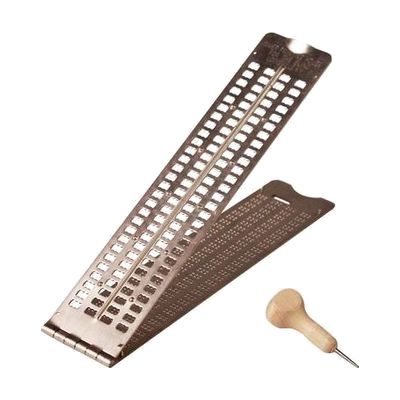
Pocket Braille Slate (Pins Up), Heavyweight Metal, Slotted for Labeling Tape, with Large Handle Stylus
by American Printing House for the Blind
Last verified June 15, 2026 · classified May 23, 2026
What it is
Summary
AI-generated from vendor-published content · May 23, 2026
A compact, heavyweight metal braille slate sized to fit in a pocket, designed for writing braille by hand using the included large-handle stylus. The slate holds paper or labeling tape (it's slotted to accommodate standard label tape widths) and allows up to 4 lines of braille characters to be punched in a single session — useful for quick notes, labeling items, or jotting reminders on the go. The pins-up orientation means the dots face upward as you write, which some users find easier to track. This is a fully manual, low-tech writing tool requiring no power or connectivity, but it does require the user to already know braille cell formations and the right-to-left writing convention that produces readable braille when the paper is flipped. Worth noting: APH has discontinued this specific model, so availability is limited to remaining stock.
Quick Facts Catalog facts · auto-generated
- AT Act lending
- Out of pocket
- School district
- Vocational rehab
What Setup Looks Like
- Out of the box
- Insert paper or labeling tape into the slate's slots.
- Use the large-handle stylus to punch dots cell by cell, writing right to left.
- Remove the paper and flip it to read the embossed braille.
- With professional help
- Learning to write braille by hand with a slate and stylus typically requires instruction from a Teacher of the Visually Impaired (TVI) or orientation and mobility specialist.
- Expect multiple sessions to develop consistent cell formation, spacing, and right-to-left writing fluency.
Getting it
Try Before You Buy
Devices like this are often available to borrow through your state's AT Act program — typically free or low-cost — so you can try it before buying or pursuing funding.
Where to Get It
Some links may be affiliate links — WhatCanHelp may earn a small commission from purchases at no extra cost to you. More on affiliates →
How to Fund This
Equipment like this is often pursued through official state programs. These are common starting points — each program decides its own eligibility and what it covers, so the first step is always a phone call.
Compare & explore
Sources & fine print
Vendor facts (name, price, platforms, vendor link) sourced from American Printing House for the Blind — view on vendor site; last verified June 15, 2026.
Classification & description AI-generated from vendor-published content on May 23, 2026 · confidence: high. Vendor specs may lag; verify before relying on details in a clinical or funding artifact.