OpticAware
by American Printing House for the Blind
Last verified July 30, 2026 · classified May 23, 2026
What it is
Summary
AI-generated from vendor-published content · May 23, 2026
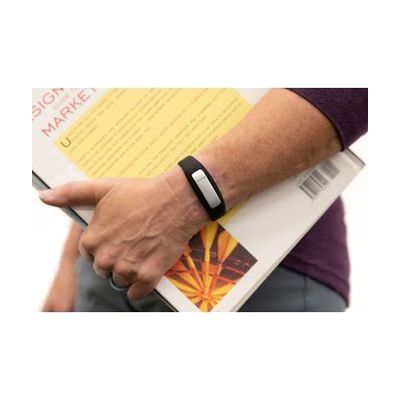
OpticAware is a smart wristband that detects when the wearer's hand moves toward their eyes and responds with a gentle vibration to interrupt the motion — targeting a behavior called eye-pressing or eye-poking, which is common among people who are blind or have low vision and can cause physical damage to the eye over time. It's designed for individuals, often children or adults with visual impairments, who engage in this repetitive self-stimulatory behavior (sometimes called a blindism) and need real-time feedback to build awareness. The wristband pairs with a companion iOS or Android app that logs each detected event, giving caregivers, therapists, or the person themselves a way to see patterns over time. This is a two-part system — the band alone provides haptic feedback, but the app data is where the behavioral tracking happens, so a smartphone or tablet is required. Most users working on behavior reduction like this will get significantly better results with support from a vision professional, behavior therapist, or orientation and mobility specialist who can contextualize the data and guide the habit-change process.
Quick Facts Catalog facts · auto-generated
- AT Act lending
- Medicaid waiver
- Out of pocket
What Setup Looks Like
- Out of the box
Charge the wristband and put it on — vibration feedback activates when the hand approaches the eye area. - With a guide
- Download the OpticAware app from the App Store or Google Play.
- Pair the wristband to the app via Bluetooth and configure sensitivity settings.
- Review event logs in the app to identify frequency patterns — allow 1-2 weeks of baseline data collection before drawing conclusions.
- See manufacturer support resources for detailed instructions.
- With professional help
- A vision rehabilitation therapist, orientation and mobility specialist, or behavior analyst can interpret usage data and design a structured behavior reduction plan.
- Expect ongoing consultation over several weeks to months depending on individual response.
Getting it
Try Before You Buy
Devices like this are often available to borrow through your state's AT Act program — typically free or low-cost — so you can try it before buying or pursuing funding.
Where to Get It
This is the vendor WhatCanHelp tracks for this product — it may also be available from other retailers or a local supplier, and prices vary.
Some links may be affiliate links — WhatCanHelp may earn a small commission from purchases at no extra cost to you. More on affiliates →
As an Amazon Associate we earn from qualifying purchases.
How to Fund This
Equipment like this is often pursued through official state programs. These are common starting points — each program decides its own eligibility and what it covers, so the first step is always a phone call.
Compare & explore
Sources & fine print
Vendor facts (name, price, platforms, vendor link) sourced from American Printing House for the Blind — view on vendor site; last verified July 30, 2026.
Classification & description AI-generated from vendor-published content on May 23, 2026 · confidence: high. Vendor specs may lag; verify before relying on details in a clinical or funding artifact.