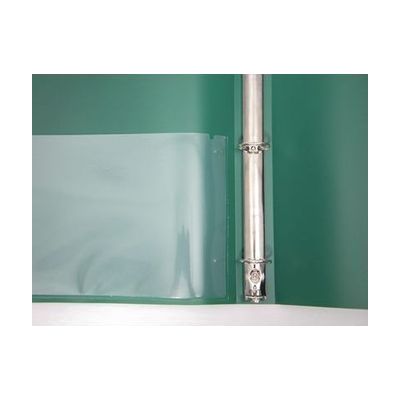
Floppy Braille Binders
by American Printing House for the Blind
Last verified July 30, 2026 · classified May 23, 2026
What it is
Summary
AI-generated from vendor-published content · May 23, 2026
These are soft, flexible plastic 3-ring binders designed specifically to accommodate the thickness and rigidity of braille paper, which is significantly heavier and bulkier than standard print paper. A student who reads braille needs organizational tools that can handle materials three to four times thicker than typical notebook paper — standard binders often can't close properly or warp under the load. Each binder includes an inside pocket for loose materials. These are a straightforward consumable organizational tool, not a piece of electronic AT, but they're purpose-matched to braille users in a way that a generic binder from an office supply store often isn't. Federal Quota eligible, meaning they can be funded through the APH quota system for eligible students with visual impairments — worth confirming with a teacher of the visually impaired (TVI) before purchasing out of pocket.
Quick Facts Catalog facts · auto-generated
- AT Act lending
- Out of pocket
- School district
What Setup Looks Like
- Out of the box
Open the binder and load braille materials onto the rings — ready to use immediately.
Getting it
Try Before You Buy
Devices like this are often available to borrow through your state's AT Act program — typically free or low-cost — so you can try it before buying or pursuing funding.
Where to Get It
This is the vendor WhatCanHelp tracks for this product — it may also be available from other retailers or a local supplier, and prices vary.
Some links may be affiliate links — WhatCanHelp may earn a small commission from purchases at no extra cost to you. More on affiliates →
As an Amazon Associate we earn from qualifying purchases.
Wondering how equipment like this gets paid for? See the official funding programs in your state.
Compare & explore
Sources & fine print
Vendor facts (name, price, platforms, vendor link) sourced from American Printing House for the Blind — view on vendor site; last verified July 30, 2026.
Classification & description AI-generated from vendor-published content on May 23, 2026 · confidence: high. Vendor specs may lag; verify before relying on details in a clinical or funding artifact.