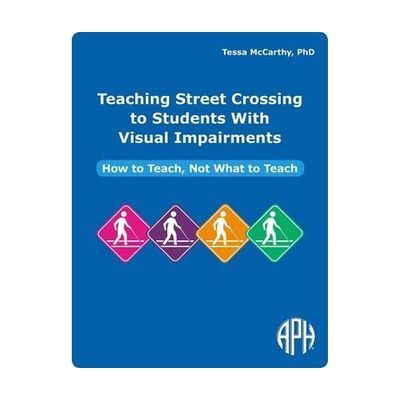
Teaching Street Crossing to Students With Visual Impairments
by American Printing House for the Blind
Price is what the vendor listed when last checked. Confirm it with the vendor before buying.
What it is
Summary
AI-generated from vendor-published content · November 15, 2026
This manual is written for orientation and mobility (O&M) professionals who teach street crossing to students who are blind or have low vision. It focuses on how to teach, covering when to start, how to sequence skills and settings, and how to plan instruction. It compares skills-based, behavioral, and Piagetian teaching approaches and uses case examples to show each in a real-world setting. It's a teaching guide for the instructor, not a workbook a student would use on their own.
Getting it
Many states lend devices like this for trial periods, free or at low cost — find your state's AT lending program.
Where to get it
This is the vendor WhatCanHelp tracks for this product — it may also be available from other retailers or a local supplier, and prices vary.
How to fund this
These are common places to ask about paying for equipment like this. Each one decides its own eligibility and what it covers, so start by asking them.
Details
Quick Facts Catalog facts · auto-generated
- Addresses
- Platform
- Age range
- Complexity
- Professional guidance helps
- Price
- $27.00
- Funding
- Out of pocket
- School district
- Vocational rehab
What setup looks like
- Out of the box
- Read the chapters in order, or jump to the topic you need, such as when to begin teaching or how to plan lessons.
- Use the case examples and vignettes to compare the teaching strategies and choose one that fits a student's age and development.
Compare & explore
More professional resources

Sources & fine print
Vendor facts (name, price, platforms, vendor link) sourced from American Printing House for the Blind — view on vendor site (opens in a new tab); last checked November 23, 2026.
Classification & description AI-generated from vendor-published content on November 15, 2026 · confidence: high. Vendor specs may lag; verify before relying on details in a clinical or funding artifact.