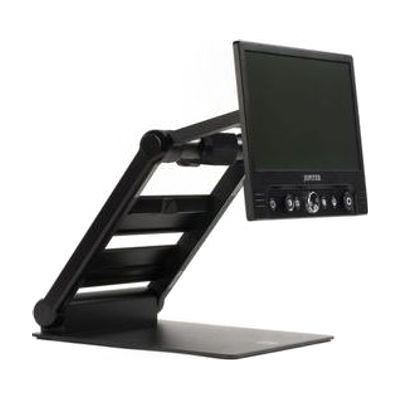
Jupiter Portable Magnifier
by American Printing House for the Blind
Last verified July 30, 2026 · classified May 23, 2026
What it is
Summary
AI-generated from vendor-published content · May 23, 2026
The Jupiter is a portable handheld video magnifier (electronic magnifier/CCTV) from APH that captures live video of text, images, or objects and displays them on a built-in screen at adjustable magnification levels with selectable contrast modes. It's designed for someone with low vision who needs a compact device to read mail, menus, labels, or other printed material on the go — without carrying a full desktop magnifier. The newer Jupiter 2.0 version adds a Plug & Play feature that connects the camera to a smartphone or tablet, extending the display to a larger screen you may already own. At nearly $3,700, this sits at the higher end of portable electronic magnifiers, so it's worth demoing before purchase to make sure the screen size, magnification range, and ergonomics fit the user's specific vision needs.
Quick Facts Catalog facts · auto-generated
- AT Act lending
- Medicaid waiver
- Out of pocket
- School district
- Vocational rehab
What Setup Looks Like
- Out of the box
Power on the device and point the camera at text or an object to see a magnified image on the screen. - With a guide
- Adjust magnification level and contrast settings to match the user's vision preferences.
- For Jupiter 2.0, connect via the Plug & Play feature to a phone or tablet following the included setup instructions — allow 15–30 minutes.
- See manufacturer support resources for detailed instructions.
- With professional help
- A low vision specialist or orientation and mobility (O&M) specialist can assess whether this device matches the user's functional vision and recommend optimal settings.
- Expect one clinical evaluation session plus a follow-up to confirm the device meets real-world reading and navigation needs.
Getting it
Try Before You Buy
Devices like this are often available to borrow through your state's AT Act program — typically free or low-cost — so you can try it before buying or pursuing funding.
Where to Get It
This is the vendor WhatCanHelp tracks for this product — it may also be available from other retailers or a local supplier, and prices vary.
Some links may be affiliate links — WhatCanHelp may earn a small commission from purchases at no extra cost to you. More on affiliates →
As an Amazon Associate we earn from qualifying purchases.
How to Fund This
Equipment like this is often pursued through official state programs. These are common starting points — each program decides its own eligibility and what it covers, so the first step is always a phone call.
Compare & explore
Sources & fine print
Vendor facts (name, price, platforms, vendor link) sourced from American Printing House for the Blind — view on vendor site; last verified July 30, 2026.
Classification & description AI-generated from vendor-published content on May 23, 2026 · confidence: high. Vendor specs may lag; verify before relying on details in a clinical or funding artifact.