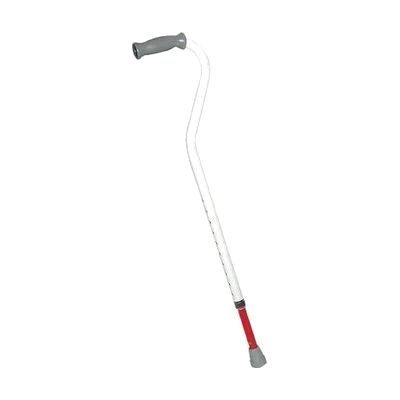
Aluminum Adjustable Canes for the Blind - Offset Handle
by MaxiAids
Last verified June 17, 2026 · classified May 31, 2026
What it is
Summary
AI-generated from vendor-published content · May 31, 2026
A rigid white and red long cane designed for blind and low-vision users who need a mobility tool for detecting obstacles and navigating independently. The offset handle reduces wrist strain compared to a straight-grip cane, making it a better fit for people who walk longer distances or have some hand or wrist discomfort. Height adjusts from roughly 29 to 38 inches, covering a range of adult users. This is a complete, ready-to-use cane — no accessories required — but cane technique is a skill: getting real benefit from long cane travel typically means working with an Orientation and Mobility (O&M) specialist rather than figuring it out independently.
Quick Facts Catalog facts · auto-generated
- AT Act lending
- Medicaid waiver
- Out of pocket
- Vocational rehab
What Setup Looks Like
- Out of the box
Adjust the telescoping shaft to the correct height for the user and lock it in place. - With professional help
- An Orientation and Mobility (O&M) specialist fits the cane to the correct height (typically navel height) and teaches safe travel techniques.
- Expect several sessions over weeks to build confident independent travel skills.
Getting it
Try Before You Buy
Devices like this are often available to borrow through your state's AT Act program — typically free or low-cost — so you can try it before buying or pursuing funding.
Where to Get It
Some links may be affiliate links — WhatCanHelp may earn a small commission from purchases at no extra cost to you. More on affiliates →
How to Fund This
Equipment like this is often pursued through official state programs. These are common starting points — each program decides its own eligibility and what it covers, so the first step is always a phone call.
Compare & explore
Sources & fine print
Vendor facts (name, price, platforms, vendor link) sourced from MaxiAids — view on vendor site; last verified June 17, 2026.
Classification & description AI-generated from vendor-published content on May 31, 2026 · confidence: high. Vendor specs may lag; verify before relying on details in a clinical or funding artifact.