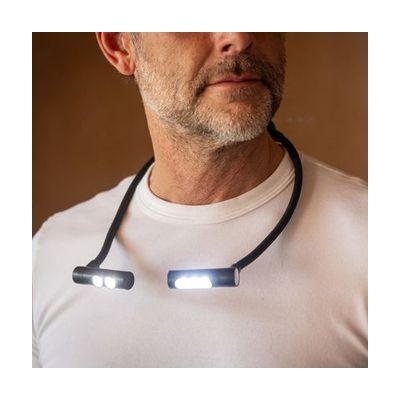
DuoNeck Go
by MaxiAids
Last verified July 29, 2026 · classified May 31, 2026
What it is
Summary
AI-generated from vendor-published content · May 31, 2026
A rechargeable neck-worn LED light that sits around the neck and directs two adjustable beams hands-free toward whatever you're working on. It's a practical tool for anyone with low vision who needs high-quality, close-range task lighting without occupying a hand or repositioning a lamp — useful for reading, handwork, medication management, or detailed close-up tasks. The light offers three color temperatures (warm, neutral, daylight) and stepless dimming with memory, plus a toggle between flood and spot beam patterns, which is genuinely useful for adapting to different tasks. CRI of 95+ means colors render accurately, which matters for distinguishing fine details. Battery life is long on low settings, though the 85-lumen maximum is modest — this works best as a supplement to existing room lighting rather than a primary light source.
Quick Facts Catalog facts · auto-generated
- AT Act lending
- Out of pocket
What Setup Looks Like
- Out of the box
- Charge via USB before first use.
- Hang around the neck, bend the flexible arms to aim the two light heads at your work surface.
- Press the button to cycle through modes — flood/spot and color temperature.
Getting it
Try Before You Buy
Devices like this are often available to borrow through your state's AT Act program — typically free or low-cost — so you can try it before buying or pursuing funding.
Where to Get It
These are the vendors WhatCanHelp tracks for this product — it may also be available from other retailers or a local supplier, and prices vary.
Some links may be affiliate links — WhatCanHelp may earn a small commission from purchases at no extra cost to you. More on affiliates →
As an Amazon Associate we earn from qualifying purchases.
Wondering how equipment like this gets paid for? See the official funding programs in your state.
Compare & explore
Sources & fine print
Vendor facts (name, price, platforms, vendor link) sourced from MaxiAids — view on vendor site; last verified July 29, 2026.
Classification & description AI-generated from vendor-published content on May 31, 2026 · confidence: high. Vendor specs may lag; verify before relying on details in a clinical or funding artifact.