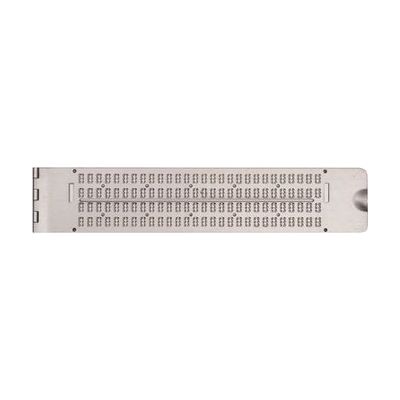
Braille Aluminum Slate 4 x 28, Pin up
by LS&S
Last verified June 18, 2026 · classified June 7, 2026
What it is
Summary
AI-generated from vendor-published content · June 7, 2026
A braille slate is a two-piece aluminum guide that holds paper so a person can manually punch braille dots with a stylus — think of it as a stencil and punch tool combined. This one accommodates 4 lines of text with 28 cells per line, which is a standard size for writing notes, labels, or short documents. It's a completely self-contained, low-tech solution: the slate, paper, and stylus are everything you need. Because braille is written right-to-left with a slate and read left-to-right, new users typically need some time learning the reversal — it's not intuitive at first and most people benefit from structured practice or instruction before writing fluently.
Quick Facts Catalog facts · auto-generated
- AT Act lending
- Out of pocket
- School district
- Vocational rehab
What Setup Looks Like
- Out of the box
Clip paper into the slate, position the stylus over a cell, and punch dots to form braille characters. - With a guide
- Learn the slate-and-stylus writing convention — dots are punched in mirror-image, right to left across each line.
- Practice basic braille cell positions before attempting words or sentences — allow several hours of structured practice to build fluency.
- See manufacturer support resources or braille literacy curricula for detailed instructions.
- With professional help
A braille instructor or vision rehabilitation therapist (VRT) can provide structured literacy instruction for users new to braille, typically over multiple sessions.
Getting it
Try Before You Buy
Devices like this are often available to borrow through your state's AT Act program — typically free or low-cost — so you can try it before buying or pursuing funding.
Where to Get It
Some links may be affiliate links — WhatCanHelp may earn a small commission from purchases at no extra cost to you. More on affiliates →
How to Fund This
Equipment like this is often pursued through official state programs. These are common starting points — each program decides its own eligibility and what it covers, so the first step is always a phone call.
Compare & explore
Sources & fine print
Vendor facts (name, price, platforms, vendor link) sourced from LS&S — view on vendor site; last verified June 18, 2026.
Classification & description AI-generated from vendor-published content on June 7, 2026 · confidence: high. Vendor specs may lag; verify before relying on details in a clinical or funding artifact.