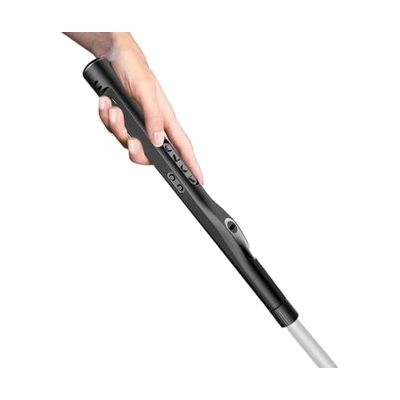
WeWALK Ultrasonic SmartCane V2
by WeWALK
Price is what the vendor listed when last checked. Confirm it with the vendor before buying.
Last verified September 20, 2026 · classified June 8, 2026
What it is
Summary
AI-generated from vendor-published content · June 8, 2026
The WeWALK SmartCane V2 is a white cane handle with an integrated ultrasonic sensor that detects obstacles above waist height — things a standard cane tip misses, like low-hanging branches, truck mirrors, and street signs — delivering vibration feedback through the grip as you get closer. The handle connects via Bluetooth to a companion iOS or Android app that provides turn-by-turn navigation, public transit integration, and nearby points-of-interest scanning, all controllable through tactile buttons on the handle so your phone stays in your pocket. This is designed for blind and low-vision users who want independent navigation outdoors, especially in unfamiliar urban environments. V2 adds weatherproofing, a built-in flashlight, Harman speakers for audio feedback, and a lighter profile than the original. The cane is a complete system — handle plus an Ambutech graphite white cane shaft — but it does require pairing with a smartphone and learning both the physical controls and the app, which takes real time to get comfortable with.
Quick Facts Catalog facts · auto-generated
- AT Act lending
- Medicaid waiver
- Out of pocket
- Vocational rehab
What Setup Looks Like
- Out of the box
Attach the WeWALK handle to the included Ambutech cane shaft — usable immediately for obstacle detection via vibration without the app. - With a guide
- Download the free WeWALK app (iOS or Android) and create an account.
- Pair the handle to your phone via Bluetooth using the app's pairing instructions.
- Explore navigation settings: set obstacle detection range (30–70 inches), preferred turn-by-turn format, and transit preferences.
- Allow 30–60 minutes for initial setup and a short practice walk; full comfort with the system typically takes several outings. See manufacturer support resources for detailed instructions.
- With professional help
- An Orientation and Mobility Specialist (O&M) can assess safe cane technique and integrate the SmartCane into an existing travel training program.
- O&M training typically spans 2–6 sessions depending on the user's current skills and target environments.
Getting it
Try Before You Buy
Devices like this are often available to borrow through your state's AT Act program — typically free or low-cost — so you can try it before buying or pursuing funding.
Where to Get It
This is the vendor WhatCanHelp tracks for this product — it may also be available from other retailers or a local supplier, and prices vary.
Some links may be affiliate links — WhatCanHelp may earn a small commission from purchases at no extra cost to you. More on affiliates →
As an Amazon Associate we earn from qualifying purchases.
How to Fund This
Equipment like this is often pursued through official state programs. These are common starting points — each program decides its own eligibility and what it covers, so the first step is always a phone call.
Compare & explore
Sources & fine print
Vendor facts (name, price, platforms, vendor link) sourced from WeWALK — view on vendor site; last verified September 20, 2026.
Classification & description AI-generated from vendor-published content on June 8, 2026 · confidence: high. Vendor specs may lag; verify before relying on details in a clinical or funding artifact.